

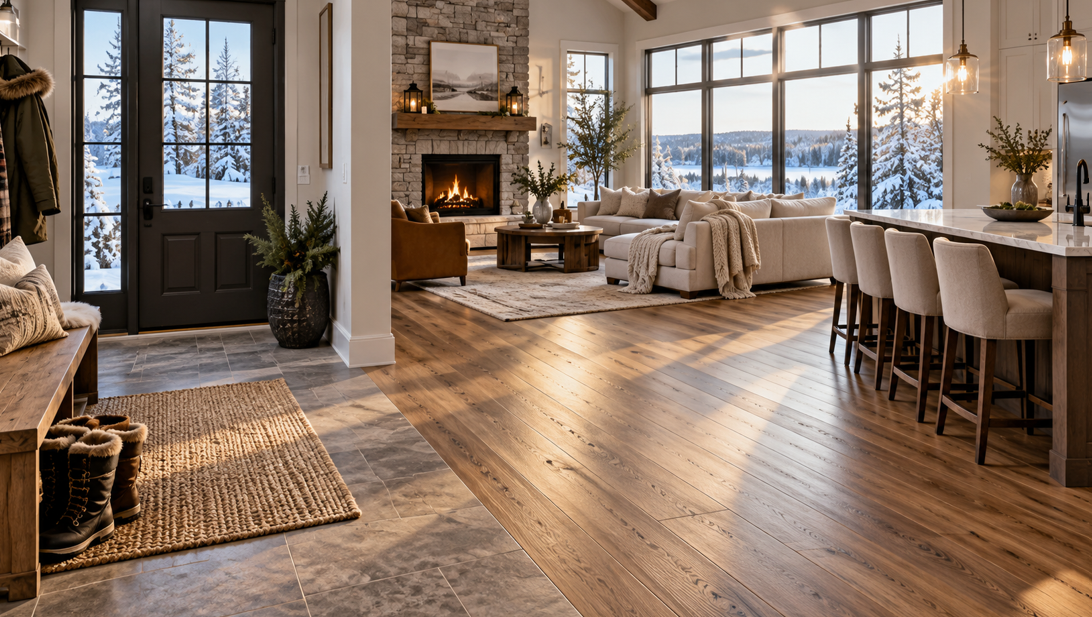
Minnesota winters are beautiful, but they can be hard on a home. Snow gets tracked through entryways, road salt collects near doors, indoor heating dries the air, and flooring has to cope with months of temperature swings between the outdoors and a warm interior. For North Oaks homeowners, choosing flooring is therefore about more than colour or style. The right material also needs to stand up to moisture, grit, changing humidity, and everyday family life.
At Abbott Paint & Carpet, we have helped Twin Cities homeowners choose durable, beautiful floors since 1945. One lesson comes up again and again: there is no single “best” floor for every room. The strongest choice depends on where the flooring will be installed, how much moisture the space sees, how much maintenance you are comfortable with, and the look you want to create.
This guide breaks down the flooring types that perform especially well through Minnesota winters, where each option works best, and what North Oaks homeowners can do to protect their investment once the snow starts falling.
What Minnesota Winters Do to Flooring
A floor in Minnesota deals with challenges that homeowners in milder climates rarely have to think about. The first is moisture. Snow and slush do not stay outside once boots, pets, children, and guests begin moving through the house. That moisture can sit on a floor surface or work its way into seams if it is not cleaned up promptly.
Road salt and de-icing products add another concern. Abrasive grit can scratch some finishes, while salty residue may leave a dull film if it builds up. Entryways, mudrooms, and paths from exterior doors generally take the most punishment.
Winter heating can also make indoor air very dry. Natural wood responds to humidity changes by expanding and contracting, so proper installation, acclimation, and humidity control matter. Comfort matters too: a surface that feels comfortable in July may feel much cooler underfoot in January.
For North Oaks homes, the goal is to balance four factors: moisture resistance, dimensional stability, durability, and comfort. The good news is that several flooring categories handle that balance very well.
The Best Flooring Options for Minnesota Winters
1. Engineered Hardwood: Natural Beauty with Better Stability
Homeowners who love the warmth and character of real wood do not have to give it up because of Minnesota's climate. Engineered hardwood is often a strong choice because it combines a genuine wood surface with a layered construction designed to improve stability.
Compared with solid hardwood, engineered hardwood generally moves less as indoor humidity changes. That makes it well suited to homes where winter heating creates noticeable seasonal dryness. It still needs sensible humidity control and professional installation, but its construction can make it more forgiving through seasonal changes.
Engineered hardwood works especially well in living rooms, dining rooms, bedrooms, hallways, and open-plan spaces. It brings the timeless look of wood into the home while offering a practical advantage in a climate where temperatures and humidity levels shift throughout the year.
The main caution is standing water. Engineered hardwood is not a waterproof floor, so melted snow should be wiped up promptly. In homes with a busy exterior entrance, a well-designed matting area or a different flooring material in the mudroom can help protect the surrounding wood.
For homeowners who want one floor to visually connect several main-level rooms, engineered hardwood offers an attractive balance of beauty, longevity, and climate-aware performance.
2. Luxury Vinyl Plank: A Practical Choice for Wet, Busy Areas
Luxury vinyl plank, often called LVP, is one of the most practical options for Minnesota households that need strong moisture resistance and easy everyday care. Many products are designed to handle spills and tracked-in snow better than moisture-sensitive materials, making LVP especially appealing in mudrooms, kitchens, lower levels, and high-traffic family spaces.
Modern luxury vinyl can also deliver a convincing wood or stone look without requiring the same maintenance as the natural material. That gives North Oaks homeowners plenty of flexibility when they want a warm, cohesive design but need a surface that can handle winter boots, pets, and frequent cleaning.
Another advantage is comfort. LVP tends to feel less cold underfoot than ceramic or porcelain tile, which can be welcome during a long Minnesota winter.
Quality matters, though. Wear layer, core construction, locking system, subfloor preparation, and installation all affect long-term performance. A product chosen simply because it looks good in a sample may not be the best fit for a busy entryway or basement.
When comparing flooring options, it is worth looking beyond the surface design and considering where the material will be used, how much moisture it may encounter, and how much traffic the space receives.
3. Porcelain or Ceramic Tile: Excellent for Entryways and Mudrooms
Tile is one of the most durable choices for areas that see regular snow, slush, and grit. Porcelain in particular is known for low water absorption, making it a strong candidate for foyers, mudrooms, bathrooms, and other spaces where winter moisture is part of daily life.
It is also easy to clean. Salt residue, muddy paw prints, and melted snow can generally be removed without the same concern about moisture penetration that comes with some wood-based materials.
The trade-off is comfort. Tile feels cool underfoot, especially in winter, and grout lines require routine care. Area rugs or runners can make hard surfaces more comfortable in transitional spaces while also trapping grit before it travels farther into the home.
Tile also offers broad design flexibility, from stone looks and warm neutrals to subtle textures and larger formats. Used strategically, a tiled mudroom can act as a durable buffer that helps protect adjoining hardwood or carpet.
4. Carpet: Warmth Where Comfort Matters Most
Carpet may not be the first material people think of when discussing winter durability, but it remains one of the most comfortable flooring choices for bedrooms, family rooms, and other dry living areas.
In a Minnesota winter, carpet provides softness and warmth underfoot that hard-surface materials simply cannot match. It can also help make a room feel quieter and more relaxed, which is especially appealing in spaces where the household spends more time indoors during colder months.
The key is placing carpet in the right rooms. It is less suitable for entries where snow, salt, and mud are common. In bedrooms, upstairs hallways, and finished living spaces away from exterior doors, however, it can be an excellent fit.
For busy households, look at fibre type, stain resistance, density, and construction rather than choosing on softness alone.
5. Laminate: Durable Style with Important Moisture Considerations
Laminate can provide realistic wood looks, scratch resistance, and good value for busy households. Newer products may offer improved water resistance, but it is important to distinguish between water-resistant and waterproof claims and to follow the manufacturer's care guidance closely.
In drier rooms such as bedrooms, home offices, or some living areas, laminate can perform very well. It may also suit households that want a durable surface capable of handling everyday foot traffic and pet activity.
The main concern during a Minnesota winter is repeated exposure to moisture. If snow or slush regularly reaches the floor, the product's construction and water-resistance rating become especially important. Seams and edges can be vulnerable if moisture is allowed to sit.
For that reason, laminate is generally a more room-specific choice than LVP or tile when winter moisture is a major factor.
Which Flooring Works Best in Each Room?
Rather than trying to find one material for an entire house, many homeowners get better results by matching flooring to the demands of each space.
Entryways and Mudrooms
These are the hardest-working floors in winter. Moisture resistance and easy cleaning come first. Porcelain tile and quality luxury vinyl are both strong options because they can handle frequent contact with wet boots and grit.
A good entry mat system also matters. Use an exterior mat to remove coarse debris and an interior mat to absorb moisture. This simple combination can reduce the amount of salt and water that reaches the rest of the home.
Kitchens
Kitchens need a surface that handles spills, heavy foot traffic, and frequent cleaning. LVP, tile, and some engineered hardwood products can all work, depending on the household's priorities.
For visual continuity with adjoining living space, engineered hardwood can be appealing; for greater moisture resistance and easy cleaning, luxury vinyl or tile may fit better.
Living and Dining Areas
Engineered hardwood is a natural fit for living and dining rooms because it creates warmth, continuity, and lasting visual appeal. Carpet can also work beautifully in more relaxed family spaces where softness and acoustic comfort are important.
Bedrooms
Carpet and engineered hardwood are both popular bedroom options. Carpet offers maximum warmth and softness, while hardwood provides a timeless look and works well with area rugs.
Basements and Lower Levels
Basements deserve careful consideration because moisture conditions can differ significantly from upper levels. Luxury vinyl is often a practical option because of its resilience and moisture-friendly characteristics. Tile may also work well where a harder surface is suitable.
Before any floor is installed, it is important to understand the condition of the concrete slab, subfloor, and moisture levels. The best flooring product cannot compensate for an unresolved moisture problem underneath it.
How to Protect Your Flooring Through a Minnesota Winter
Even the most durable flooring benefits from a few seasonal habits. Winter care is less about constant maintenance and more about preventing moisture and grit from sitting on the floor.
Start at the entrance. High-quality mats on both sides of frequently used exterior doors can capture a surprising amount of water, salt, and debris. Shake out or clean those mats regularly so they continue doing their job.
Wipe up melted snow quickly, particularly on hardwood, laminate, and floors with seams. A small puddle left overnight creates more risk than several brief wet footprints that are cleaned soon after.
Sweep or vacuum high-traffic areas often. Grit acts like sandpaper under shoes and chair legs, so removing it helps preserve the finish on wood, vinyl, laminate, and tile.
For wood flooring, keep indoor humidity within the range recommended by the flooring manufacturer. Humidification can help reduce excessive seasonal shrinkage, but too much humidity can create other problems. Consistency is the goal.
Use cleaning products designed for the specific floor, since strong chemicals or excessive water can damage finishes. Felt pads, rugs, and other furniture protection can also help prevent scratches during the months when rooms see heavier indoor use.
What North Oaks Homeowners Should Consider Before Choosing
A flooring sample can tell you a lot about colour and texture, but it cannot show how the material will perform in your actual home. Before making a decision, think through the way each room functions during the coldest months of the year.
Consider these questions:
How close is the room to an exterior door, garage entrance, or mudroom?
Will wet boots, pets, or children regularly cross the floor?
Is the space above grade, below grade, or over a concrete slab?
Do you want the same flooring to continue into adjoining rooms?
How important is warmth underfoot?
How much routine maintenance are you comfortable with?
Does your household need extra scratch, stain, or moisture resistance?
Are you willing to manage indoor humidity for a natural wood floor?
The answers usually make the right category much clearer. A busy household may benefit from tile or LVP at the entrance, engineered hardwood in main living spaces, and carpet upstairs for warmth. Thoughtful transitions between materials can improve performance while keeping the design cohesive.
A Few Common Minnesota Flooring Questions
Is Hardwood a Bad Choice for Minnesota Winters?
No. Hardwood can perform beautifully in Minnesota when the product, installation method, and indoor environment are appropriate. Engineered hardwood is often particularly appealing because its layered construction offers improved dimensional stability.
The most important factors are professional installation, sensible humidity management, and prompt cleaning of tracked-in moisture.
Is Waterproof Flooring Necessary?
Not in every room. Waterproof or highly moisture-resistant flooring is most valuable where snow, slush, spills, or basement moisture are realistic concerns.
Bedrooms and formal living areas usually have different needs than mudrooms and lower levels. Choosing according to how each room is used is often more practical than selecting one material based on a single performance feature.
What Flooring Is Easiest to Maintain During Winter?
Luxury vinyl and tile are generally among the easiest options to clean when dealing with wet footprints, grit, and salt residue. That does not automatically make them the best choice for every room, but they are especially practical in high-moisture entry zones.
For homeowners who prefer hardwood or carpet elsewhere in the house, using a more moisture-resistant material at exterior entrances can help create a practical first line of defence.
Can I Use the Same Flooring Throughout an Open-Plan Main Level?
Often, yes. Engineered hardwood and luxury vinyl are both commonly used to create continuity across larger living areas. The deciding factor is usually how much moisture the kitchen or exterior entrances bring into the space.
In some homes, a strategic tile or vinyl entry zone offers better protection without sacrificing visual flow. The transition can be planned as part of the overall design rather than treated as an afterthought.
Choose Flooring for the Way Your Home Lives in Winter
The best flooring for a Minnesota winter is not simply the material with the highest moisture rating or the toughest surface. It is the floor that matches the room, the household, and the way your home functions when snow and cold weather become part of everyday life.
For North Oaks homeowners, engineered hardwood can bring lasting warmth to main living areas, luxury vinyl can make busy wet zones easier to manage, tile can protect hard-working entrances, and carpet can add welcome comfort to bedrooms and family spaces. A well-planned combination often delivers the best overall result.
If you are comparing materials for a renovation, seeing full-size samples in your own lighting and talking through installation conditions can make the decision much easier. The Abbott team serves homeowners across North Oaks and the wider Twin Cities area from our St. Paul, White Bear Lake, and Stillwater showrooms. When you are ready to explore the possibilities, get in touch and we will help you find a floor that looks beautiful and works confidently through every Minnesota season.


