

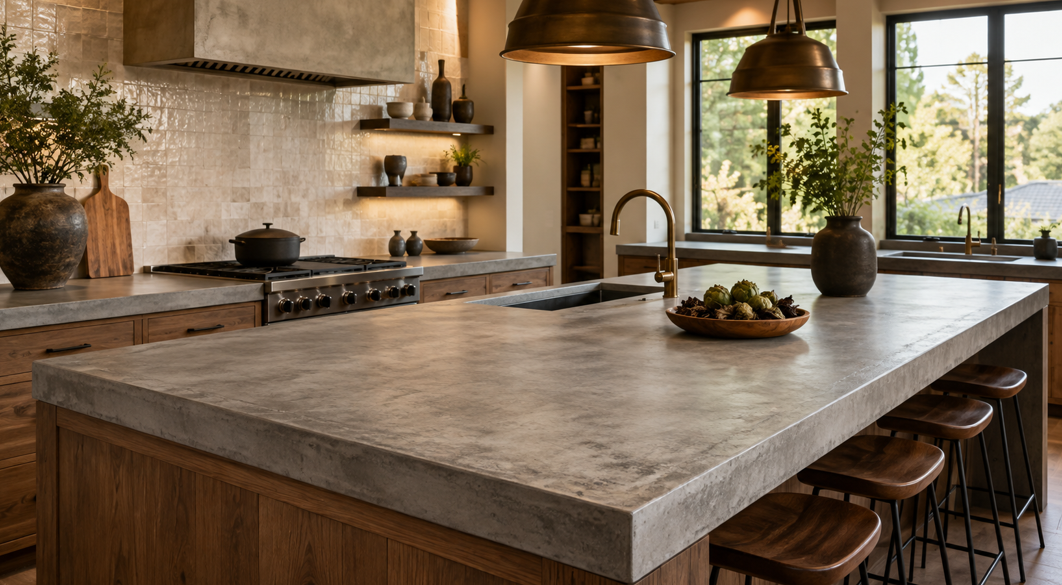
A kitchen countertop does not have to fade quietly into the background. For North Oaks homeowners who want their renovation to feel personal, architectural, and unlike anything found in a standard showroom display, concrete offers a compelling alternative to more familiar surfaces.
Concrete countertops can be smooth and understated, richly textured, boldly coloured, or designed to resemble natural stone. They can be formed into unusual shapes, personalised with decorative details, and finished in tones that complement everything from warm wood cabinetry to sleek modern interiors.
At Abbott Paint & Carpet, we help Twin Cities homeowners compare countertop options with the full room in mind. Concrete is not the best fit for every household, but its creative flexibility makes it worth exploring for homeowners who value craftsmanship and individuality. This guide explains what concrete countertops are, why they appeal to design-conscious North Oaks homeowners, how they perform in everyday kitchens, and what to consider before choosing them.
What Are Concrete Countertops?
Concrete countertops are made from a mixture that typically includes cement, aggregates, water, and additional materials selected to improve strength, appearance, or workability. The mixture is poured into a mould, allowed to cure, and then finished and sealed.
Unlike a standard concrete pavement or basement floor, a countertop is carefully designed for interior use. The colour, texture, edge profile, thickness, and surface finish can all be controlled to create a refined result.
Some concrete countertops are cast off-site and transported to the home after curing. Others are formed and poured in place. The best method depends on the size of the countertop, access to the room, the complexity of the design, and the fabricator’s preferred process.
Concrete may be associated with industrial interiors, but it can take on many different personalities. A pale cream surface with soft movement can feel warm and understated. A charcoal countertop may look dramatic and modern. A lightly textured finish can suit a rustic kitchen, while a smooth surface with simple edges works well in a contemporary home.
Why Concrete Appeals to Homeowners Who Want Something Different
Many countertop materials are selected from existing slabs or manufactured designs. Concrete offers a different experience because it can be created specifically for the room.
That custom quality is especially appealing in North Oaks, where homes often include generous kitchens, distinctive architecture, large islands, and carefully chosen materials. Homeowners may want a surface that feels designed for the property rather than selected from a common pattern.
Concrete provides opportunities to personalise:
The overall colour and undertone of the surface.
The level of texture or smoothness.
The thickness and visual weight of the countertop.
The shape and dimensions of an island.
The profile of exposed edges.
The placement of integrated drainboards or other features.
Decorative aggregates, subtle movement, or handcrafted variation.
The finished surface is rarely completely uniform. Small changes in tone, texture, or movement are part of concrete’s character. For homeowners who appreciate handmade materials, those variations can make the countertop feel more authentic and individual.
Concrete Can Suit More Than Industrial Kitchens
Concrete is often pictured alongside black metal, exposed brick, and warehouse-inspired lighting. While it works beautifully in industrial spaces, it is far more versatile than that image suggests.
Modern Kitchens
In a modern North Oaks kitchen, a smooth concrete countertop can create a clean, architectural look. Straight edges, minimal pattern, and an understated colour keep the design streamlined.
Pale grey, warm greige, cream, or charcoal concrete can be paired with flat-panel cabinetry, simple hardware, and large-format flooring. The result feels intentional without becoming cold.
Rustic and Modern Farmhouse Kitchens
A lightly textured concrete surface works well with natural wood, painted cabinetry, handcrafted tile, and aged metal finishes. It can add substance and character without competing with the other materials.
Warm beige, taupe, or soft stone colours can make concrete feel more relaxed than traditional grey.
Transitional Kitchens
Transitional design blends traditional comfort with cleaner contemporary lines. Concrete can contribute a subtle modern note while wood cabinetry, classic lighting, and decorative details preserve warmth.
A simple edge and a softly polished surface often work well in this setting.
Scandinavian-Inspired Interiors
Concrete complements the restrained colours and natural materials associated with Scandinavian design. A pale, low-sheen surface can sit comfortably beside white oak, warm white walls, and simple furniture.
Its visual texture helps prevent a neutral room from feeling flat.
How Customisable Are Concrete Countertops?
Customisation is one of concrete’s greatest strengths. Homeowners can make decisions about colour, finish, shape, thickness, and detail in ways that are not always possible with other surfaces.
Colour Options
Concrete does not have to remain its natural grey colour. Pigments can create shades ranging from soft white and sand to brown, terracotta, blue-grey, and deep charcoal.
Warm neutrals are especially appealing in current kitchens. Cream, beige, taupe, and warm greige can soften the industrial character of concrete and help it blend with wood cabinetry and natural flooring.
Colour samples are important because the final appearance can vary according to the mixture, finishing process, sealer, and curing conditions. A small sample may not reproduce every variation visible across a full countertop, but it can establish the general direction.
Surface Texture
Concrete can be finished to look smooth and refined or more tactile and organic. A polished surface may reveal fine aggregate and create a gentle sheen. A honed or matte finish feels softer and more understated.
Small pinholes, tonal movement, and subtle texture may remain visible. These characteristics are often considered part of the material’s handcrafted appeal rather than flaws.
Edge Profiles
Because concrete is formed in a mould, the edge can be customised. A simple eased edge creates a clean look, while a thicker or more detailed profile adds visual weight.
The edge design can help concrete feel either modern or traditional. A straight, minimal profile looks architectural, while a softly rounded edge may feel more comfortable in a family kitchen.
Shape and Size
Concrete can be useful for islands with unusual dimensions or shapes. Curves, angles, extended seating areas, and oversized surfaces may be possible depending on the design and fabrication method.
Large pieces require careful planning because concrete is heavy. Fabrication, reinforcement, transportation, access, and cabinet support all need to be considered before the final design is approved.
Is Concrete Durable Enough for a Kitchen?
Concrete is a strong material, but countertop performance depends on more than strength alone. The mixture, reinforcement, curing, finish, sealer, installation, and daily care all influence how the surface ages.
A well-made concrete countertop can provide many years of service. It can handle ordinary food preparation and daily activity when it is properly protected. However, homeowners benefit from understanding that concrete develops character over time.
Minor marks, tonal changes, and fine hairline cracks may appear. These changes do not always affect performance, but they can become part of the surface’s appearance.
Homeowners who want a perfectly uniform countertop that remains visually unchanged may prefer an engineered material. Those who enjoy natural variation and the evolving character of handcrafted surfaces may find concrete especially rewarding.
Will Concrete Countertops Crack?
Cracking is one of the most common concerns about concrete. Hairline cracks can occur as the material cures or responds to movement. Careful mixture design, reinforcement, controlled curing, proper support, and experienced fabrication can reduce the likelihood of significant cracking.
Small hairline cracks are often cosmetic rather than structural. Their visibility depends on the colour, finish, and location of the crack.
Larger cracks may be associated with inadequate support, movement, impact, or fabrication issues. This is one reason professional planning is so important. Cabinets and supporting structures need to accommodate the weight and design of the countertop.
Before choosing concrete, it is worth discussing expected variation with the fabricator. Understanding what is considered normal helps homeowners decide whether the material’s natural character suits their expectations.
Are Concrete Countertops Stain-Resistant?
Concrete is naturally porous, so it needs an appropriate sealer for kitchen use. The sealer helps protect the surface from water, oils, wine, coffee, acidic ingredients, and other common spills.
Different sealers offer different levels of protection, sheen, heat tolerance, and maintenance. Some create a highly protective surface layer, while others preserve a more natural feel but may require additional care.
Even with a quality sealer, spills are best wiped up promptly. Strongly coloured or acidic substances can be more likely to leave marks if they remain on the surface.
Homeowners considering concrete can browse Abbott’s range of countertops and compare it with quartz, granite, quartzite, marble, and other materials. Reviewing several options together helps clarify how much maintenance, variation, and personalisation feel right for the household.
How Heat-Resistant Is Concrete?
Concrete itself can tolerate heat, but the countertop’s sealer may have different limitations. Placing a very hot pan directly on the surface could discolour or damage some sealers, even if the concrete underneath remains intact.
Using a trivet is a simple way to protect the finish. It also helps prevent sudden temperature changes that could contribute to stress within the surface.
The same advice applies to many countertop materials. A protective pad preserves the appearance and supports long-term performance.
Does Concrete Require Much Maintenance?
Concrete countertop care is usually straightforward, but it may involve more attention than some engineered surfaces.
Daily cleaning can generally be handled with a soft cloth, water, and a mild cleaner approved for the sealer. Abrasive pads and harsh chemicals are best avoided because they may dull or weaken the protective finish.
Depending on the sealer and level of use, the surface may eventually need resealing or refinishing. The installer or fabricator can explain the expected schedule and recommend suitable products.
Care usually includes:
Wiping up spills promptly, particularly oils and acidic liquids.
Using chopping boards rather than cutting directly on the countertop.
Protecting the surface from very hot cookware with trivets.
Avoiding abrasive cleaners and scouring pads.
Following the fabricator’s recommendations for resealing.
Checking high-use areas periodically for changes in the protective finish.
For many homeowners, these habits become an easy part of kitchen care. Others may prefer a surface with fewer ongoing considerations.
What Does a Concrete Countertop Cost?
Concrete countertop pricing varies considerably because the material is often custom-made. The final cost may be influenced by the dimensions, thickness, colour, finish, edge detail, sink cut-outs, reinforcement, installation method, and complexity of the design.
A straightforward countertop may be more affordable than a highly customised island with decorative details and an unusual shape. Transportation and access can also affect pricing because finished concrete pieces are heavy.
Rather than comparing concrete by material price alone, it is helpful to consider the full installed project. Custom design, fabrication, sealing, delivery, support, and installation all contribute to the result.
A detailed estimate gives homeowners a clearer picture of what is included and helps prevent unexpected decisions during the project.
How Heavy Are Concrete Countertops?
Concrete is heavier than many countertop materials. The exact weight depends on thickness, mixture, and construction, but cabinet support is an important part of the planning process.
Existing cabinets may need to be evaluated before installation. Additional reinforcement may be recommended for large islands, long unsupported spans, or extended seating areas.
Weight also affects delivery and access. Doorways, staircases, corners, and room layout are considered when determining whether the countertop will be cast in sections, fabricated off-site, or poured in place.
These practical details are best addressed early. They do not necessarily make concrete unsuitable, but they influence how the project is designed and completed.
Where Can Concrete Work Best in a North Oaks Home?
Concrete can be used throughout the home, not only as the main kitchen work surface.
Kitchen Islands
A concrete island can act as the focal point of the room. Its shape, thickness, colour, and edge can be personalised, making it a strong choice for a statement feature.
Some homeowners pair a concrete island with a different material on the perimeter counters. This creates contrast while keeping concrete in a manageable, highly visible area.
Perimeter Countertops
Using concrete throughout the kitchen creates a cohesive architectural appearance. A lighter colour can prevent a large amount of concrete from feeling too heavy.
Bathroom Vanities
Concrete can create a distinctive vanity surface, particularly when paired with wood cabinetry, textured tile, or matte metal fixtures. Moisture protection and a suitable sealer remain important.
Bars and Entertaining Areas
A lower-level bar, serving counter, or wine room can be an excellent place to introduce concrete. The material gives the space a tailored, custom feel.
Fireplace Surrounds and Built-In Features
Concrete can be coordinated across countertops, hearths, shelving, or other architectural details. Repeating the material in selected areas can create a unified design.
How to Coordinate Concrete with Cabinets and Flooring
Concrete looks most successful when it is chosen as part of the full room rather than treated as an isolated surface.
Warm wood cabinets can soften grey concrete and bring out subtle brown or taupe undertones. Painted cabinets in cream, black, green, or deep blue can create a stronger contrast.
Flooring also affects the overall balance. Natural hardwood adds warmth to cool concrete, while matte tile or luxury vinyl can reinforce a clean, modern look. When both the floor and countertop have visible texture, keeping one pattern quieter can prevent the room from feeling busy.
Lighting deserves equal attention. Concrete may look different under warm and cool bulbs, and natural daylight can reveal undertones that are less visible in a showroom. Reviewing samples with cabinetry, flooring, paint, and hardware makes the final choice more reliable.
Concrete Versus Other Countertop Materials
Concrete is not intended to imitate every benefit of quartz, granite, or quartzite. Its value lies in the combination of customisation and handcrafted character.
Quartz may appeal to homeowners who want greater consistency and straightforward maintenance. Granite and quartzite offer the natural pattern and mineral depth of quarried stone. Marble provides a classic surface that develops its own character over time.
Concrete stands apart because the colour, shape, texture, and detailing can be created specifically for the project. It is best suited to homeowners who see natural variation as part of the design rather than something to eliminate.
Frequently Asked Questions About Concrete Countertops
Do Concrete Countertops Always Look Industrial?
No. Colour, finish, edge profile, cabinetry, lighting, and surrounding materials determine the final style. Cream or taupe concrete can feel warm and refined, while textured finishes can work in rustic or transitional kitchens.
Can Concrete Countertops Be Repaired?
Minor chips, marks, or cracks may sometimes be repaired, although the result depends on the type and location of the damage. A qualified professional can assess the surface and recommend the most appropriate approach.
Can Concrete Include Decorative Details?
Yes. Depending on the fabricator, concrete may include selected aggregates, pigments, impressions, or embedded decorative elements. Restraint often creates the most timeless result.
Does Concrete Change Colour Over Time?
Some colour variation may develop as the surface cures, ages, or responds to use and sunlight. Sealers and maintenance also influence the appearance.
Is Concrete Suitable for a Busy Family Kitchen?
It can be, especially when the countertop is well fabricated, properly sealed, and cared for consistently. Families who want very low maintenance may prefer to compare concrete with quartz or another engineered option.
Is Concrete Right for Your North Oaks Home?
Concrete countertops are an excellent option for homeowners who value individuality, craftsmanship, and creative control. They can be shaped, coloured, textured, and detailed to suit the architecture of the home rather than relying on a standard appearance.
The trade-off is that concrete requires realistic expectations. Natural variation, possible hairline cracks, sealing, and thoughtful care are all part of living with the material. For the right homeowner, those characteristics contribute to its beauty rather than detract from it.
Ready to explore a countertop that feels genuinely personal? Visit Abbott Paint & Carpet in St. Paul, White Bear Lake, or Stillwater, or get in touch with our experienced team. We will help you compare colours, materials, finishes, and practical considerations so your North Oaks kitchen feels distinctive, welcoming, and designed around the way you live.


