

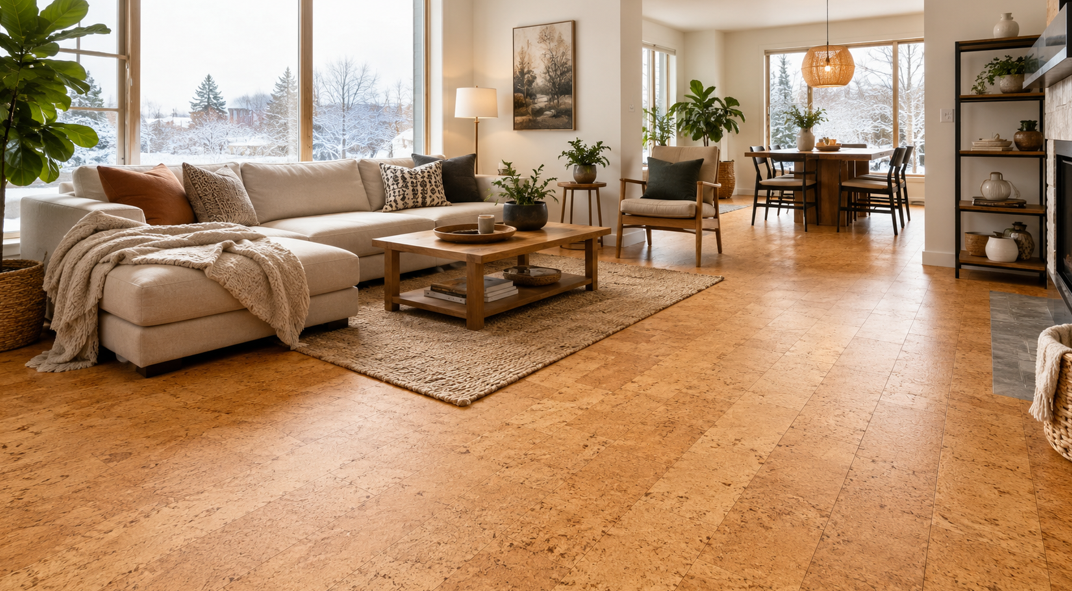
Choosing flooring for a Minnesota home involves more than finding a colour or pattern you love. The material also needs to feel comfortable through long winters, handle everyday family life, and fit the character of the home. That is why cork flooring is gaining attention among St. Paul homeowners who want something warm, distinctive, and environmentally thoughtful.
Cork has a softer feel underfoot than many hard-surface floors, naturally absorbs sound, and brings an organic texture that works in both traditional and contemporary rooms. It can be an excellent fit for bedrooms, home offices, living areas, and selected kitchens when the right product is installed and maintained correctly.
At Abbott Paint & Carpet, we have helped Twin Cities homeowners choose flooring since 1945. Cork is not the right answer for every room, but it offers a compelling combination of comfort, style, and practical benefits. This guide explains how cork flooring is made, how it performs in Minnesota conditions, where it works best, and what St. Paul homeowners may want to consider before deciding.
What Is Cork Flooring?
Cork flooring is made from the bark of the cork oak tree. The bark can be harvested without cutting down the tree, and it grows back over time. That renewable harvesting process is one reason cork appeals to homeowners who want to make more environmentally conscious design choices.
The raw cork is processed into granules and combined with binders before being formed into flooring tiles or planks. Some products have a solid cork construction, while others use a layered format with a cork surface over a stabilising core. Many modern cork floors include a protective factory finish designed to improve resistance to stains, wear, and moisture.
Cork has a cellular structure filled with tiny air pockets. Those pockets give the material its natural cushioning, sound absorption, and thermal qualities. When you walk across a cork floor, it feels slightly softer and warmer than many other hard surfaces.
Visually, cork is more versatile than many people expect. Natural products show the familiar speckled or marbled look, while manufactured designs can feature colours, patterns, and visuals that resemble wood or stone. This range allows cork to suit historic St. Paul homes, mid-century interiors, and modern renovations alike.
Why Cork Appeals to Minnesota Homeowners
Minnesota homeowners often want flooring that feels comfortable during cold months without making a room difficult to clean. Cork occupies an interesting middle ground. It has the wipe-clean convenience of a hard surface but offers more warmth and resilience underfoot than tile or many wood-look products.
The material also supports the preference for interiors that feel natural and relaxed. In rooms with warm paint colours, natural woodwork, woven fabrics, and plenty of daylight, cork can create an inviting foundation without looking overly polished.
For St. Paul properties with multiple levels, shared walls, or active family spaces, cork’s sound-reducing qualities are another advantage. It can help soften footsteps and reduce the sharp, echoing quality that sometimes occurs in rooms dominated by hard materials.
Is Cork Flooring Warm Underfoot?
Yes. Cork generally feels warmer underfoot than tile, stone, or some dense hard-surface floors because its cellular structure slows heat transfer. It does not generate heat, but it tends to feel less cold when stepped on.
That quality can be especially appealing during a St. Paul winter. In bedrooms, home offices, reading rooms, and family spaces, the warmer feel can make the room more comfortable without relying entirely on rugs.
Homeowners considering radiant heating will want to confirm compatibility with the specific cork product. Some products may be suitable, while others have temperature or installation limitations.
Does Cork Flooring Reduce Noise?
Cork is one of the more sound-absorbing flooring materials available for residential use. Its structure helps dampen impact noise, including footsteps, dropped items, and the movement of chairs.
This can make cork a strong option for:
Upper-level bedrooms where footfall noise travels to rooms below.
Home offices where a quieter environment supports concentration.
Playrooms where activity and toys create frequent impact sounds.
Condominiums or attached homes where reducing noise transfer is valuable.
Open-plan rooms that otherwise feel echoey.
The exact sound performance varies according to product thickness, installation method, underlay, and subfloor construction. Cork can improve acoustic comfort, but it does not provide complete soundproofing.
Is Cork Comfortable to Walk and Stand On?
Cork has a slight natural resilience that makes it more forgiving than tile, stone, or concrete. The surface compresses subtly under pressure and then recovers, creating a cushioned feel.
That comfort can be helpful in spaces where people spend time standing, such as a home office with a standing desk, a hobby room, or a kitchen used for frequent cooking. It can also make bedrooms and family rooms feel relaxed and welcoming.
The softer surface does require care. Heavy furniture can leave temporary or permanent indentations, especially when the weight is concentrated on narrow legs. Wide furniture pads or protective cups can distribute pressure more evenly.
Sharp objects, pet claws, and dragged furniture may also mark the finish. Cork is durable enough for many households, but it performs best when homeowners understand that its comfort comes from a material that is naturally softer than hardwood or tile.
How Durable Is Cork Flooring?
Cork flooring can provide long-lasting service when the product is well made, properly installed, and suited to the room. Its durability depends on the density of the cork, the construction of the plank or tile, the protective finish, and the amount of traffic it receives.
In moderate-use spaces such as bedrooms, offices, dens, and living rooms, cork can perform very well. In busier areas, a high-quality product with a strong wear finish is worth considering.
Direct sunlight can change the colour of natural cork, just as it can affect hardwood and many other flooring materials. Window treatments, furniture placement, and occasional rug rotation can help the colour change more evenly.
Homeowners with large dogs or very active households may prefer to compare cork with other resilient options before deciding. The goal is to match the material to the household’s routines and expectations.
Can Cork Handle Minnesota’s Seasonal Changes?
Minnesota homes experience substantial seasonal shifts in temperature and indoor humidity. Winters can be dry indoors, while summers may bring higher humidity. Like many natural materials, cork can respond to those changes by expanding or contracting slightly.
Stable indoor conditions help the floor perform at its best. Humidity control, correct acclimatisation, and proper expansion space during installation all matter. An experienced installer can follow the product specifications and account for the room’s conditions.
Cork’s dimensional response depends partly on how the floor is constructed. Floating cork planks and glue-down tiles have different installation requirements, and subfloor preparation is important for both.
A flat, clean, dry subfloor supports a smooth result. Moisture testing may also be recommended, especially over concrete or in below-grade areas. For St. Paul homeowners, the key is to choose a product that suits the room and to treat installation as part of the flooring system.
Is Cork Flooring Water-Resistant?
Cork contains a natural waxy substance called suberin, which gives it some resistance to moisture and decay. However, cork flooring is not automatically waterproof.
Protective finishes and product construction can improve water resistance, but standing water and repeated moisture exposure may still cause swelling, staining, or damage. Spills are best wiped up promptly, and wet cleaning methods that saturate the floor are generally avoided.
A carefully selected cork floor may work in a kitchen or powder room when the manufacturer approves that use and the household can manage spills quickly. Full bathrooms, laundry areas with frequent leaks, and damp basements may call for a more moisture-tolerant material.
You can explore Abbott’s full range of flooring to compare cork with hardwood, luxury vinyl, laminate, carpet, and other choices. Seeing the options together can make it easier to balance comfort, moisture performance, maintenance, and design.
Where Does Cork Flooring Work Best?
Cork performs best in dry, climate-controlled rooms where its comfort and acoustic qualities add meaningful value.
Bedrooms
Bedrooms are one of the strongest applications for cork. The surface feels warm in the morning, softens footsteps, and creates a calm, natural look. It can be paired with area rugs for additional comfort without covering the entire floor.
Home Offices
Cork works particularly well in a home office because it reduces echo and feels comfortable during long periods at a desk. Protective pads beneath chairs and furniture help preserve the surface.
Living Rooms and Dens
In living areas, cork can make the room feel warm and intimate. Its natural variation works well with wood furniture, soft upholstery, and layered lighting. It is also quieter than many hard-surface alternatives.
Playrooms
The slight cushioning can make cork a comfortable choice for children’s play areas. It also helps soften impact noise. A durable finish and prompt spill clean-up remain important.
Kitchens
Cork can be appealing in a kitchen because it is easier on the feet than tile during long periods of standing. However, product approval, seam protection, and moisture habits deserve careful attention.
Lower Levels
Basements require a cautious approach. Cork may not be suitable where moisture is present or where the slab has not been tested. Some engineered cork products may be approved for selected below-grade installations, but the manufacturer’s instructions and site conditions guide the decision.
What Are the Main Advantages of Cork Flooring?
Cork offers a combination of benefits that is difficult to reproduce with a single alternative material.
Its main advantages include:
A naturally warm and comfortable feel underfoot.
Useful sound absorption in bedrooms, offices, and upper-level rooms.
Renewable raw material harvested from cork oak bark.
Distinctive organic patterns and a choice of modern designs.
A resilient surface that feels gentler than tile or stone.
Compatibility with interior styles from traditional to contemporary.
These qualities make cork appealing to homeowners who prioritise comfort and character as much as conventional durability. It can be a smart choice when the room is dry, the traffic level is appropriate, and the household is willing to follow the recommended care routine.
What Are the Potential Drawbacks?
Cork’s softer character is part of its appeal, but it also creates limitations. Furniture may leave indentations, sharp objects can damage the finish, and prolonged moisture may cause problems.
Natural cork can also fade or change colour with sunlight. That change is not necessarily unattractive, but homeowners may notice a difference beneath rugs or furniture that stays in one place for years.
For homeowners who want a nearly indestructible floor or expect frequent water exposure, cork may not be the best fit. For those who value warmth, acoustic comfort, and a natural look, the trade-offs may feel entirely reasonable.
How to Choose the Right Cork Floor
The best cork floor is not simply the one with the most attractive sample. Product construction, finish, thickness, installation method, and intended use all deserve attention.
Start with the Room
Consider traffic, moisture exposure, sunlight, furniture weight, pets, and cleaning habits. A quiet bedroom has different requirements from a kitchen or busy family room.
Compare Product Construction
Cork is available as glue-down tiles and floating planks. Glue-down products generally require a very smooth subfloor and professional adhesive application. Floating floors connect over an underlay and may offer easier replacement, depending on the system.
Review the Finish
Look for a finish designed for the expected traffic. Some cork floors arrive prefinished, while others may receive additional coats after installation. The correct care products help preserve the intended appearance.
Bring Samples Home
Cork can look different under daylight, lamps, and surrounding colours. Viewing samples beside paint, cabinetry, rugs, and furniture helps reveal whether the pattern and tone suit the room.
Ask About Installation Requirements
Acclimatisation, humidity, expansion space, and subfloor testing can all affect performance. A professional estimate provides an opportunity to identify potential concerns before the project begins.
How to Care for Cork Flooring
Cork flooring is straightforward to maintain when it is cleaned gently and protected from excess moisture.
Regular dusting or vacuuming removes grit that could scratch the finish. Spills are best wiped up promptly with a soft cloth. When damp cleaning is appropriate, use a well-wrung mop and a product approved by the flooring manufacturer.
Protective pads beneath furniture help distribute weight and reduce indentations. Desk chairs may benefit from a suitable floor protector, especially in home offices. Mats near entrances can collect snow, grit, and moisture before they reach the cork.
Avoid harsh abrasives, steam cleaning, and products designed to create a high-gloss shine unless the manufacturer specifically approves them. Rugs can protect busy areas, and rotating them occasionally can help the floor age more evenly in rooms with strong sunlight.
Frequently Asked Questions About Cork Flooring
Is Cork Flooring Suitable for Pets?
Cork can work in homes with pets, especially when the floor has a durable finish and claws are kept trimmed. Large or highly active pets may scratch or dent the surface more readily than they would a harder product.
Can Cork Flooring Be Refinished?
Some solid or thick cork products can be recoated or lightly refinished, while others cannot. The answer depends on the construction and wear surface. Manufacturer guidance provides the safest direction.
How Long Does Cork Flooring Last?
A quality cork floor can last for many years when installed in an appropriate room and maintained correctly. Traffic, sunlight, moisture, furniture, and finish care all influence its service life.
Is Cork Flooring Right for Your St. Paul Home?
Cork flooring is a strong fit for homeowners who want a warmer, quieter, and more natural alternative to conventional hard surfaces. It works especially well in bedrooms, offices, dens, playrooms, and living areas where comfort and sound control matter.
It may be less suitable for rooms with frequent standing water, heavy rolling loads, or intense wear. The right answer depends on the space, the product, and the way your household lives.
For St. Paul homeowners, cork can bring welcome warmth during Minnesota winters while adding organic texture and lasting character. Ready to compare cork with other flooring options? Visit Abbott Paint & Carpet in St. Paul, White Bear Lake, or Stillwater, or get in touch with our team. We will help you review samples, understand the practical differences, and choose a floor that supports your home and your vision.


