

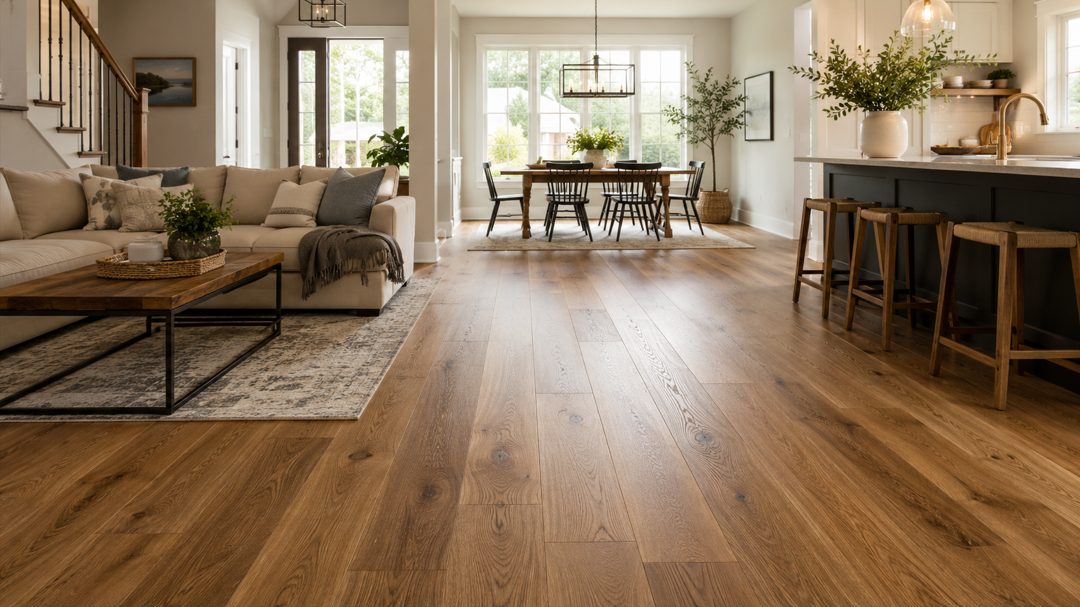
Stillwater homes have a certain kind of warmth. From historic properties near the river to newer homes built for busy family life, flooring has to do more than look beautiful. It needs to handle Minnesota’s dry winters, humid summers, muddy spring days, snowy boots, pets, guests, and everyday movement through the home.
That is why engineered hardwood flooring has become such a strong choice for Stillwater homeowners who love the natural beauty of wood but want something designed for real-life performance. It offers the look and feel of genuine hardwood, with a layered construction that can help it stay more stable as indoor conditions change through the year.
At Abbott Paint & Carpet, we have helped Twin Cities homeowners choose beautiful, durable surfaces since 1945, and engineered hardwood is often part of the conversation when customers want timeless style with practical benefits. In this guide, we will look at what engineered hardwood is, how it compares with solid wood, why it works well in Minnesota homes, and what Stillwater homeowners may want to consider before choosing a floor.
What Is Engineered Hardwood Flooring?
Engineered hardwood is real wood flooring, but it is made differently from traditional solid hardwood. Solid hardwood is cut from one continuous piece of timber. Engineered hardwood has a genuine hardwood surface layer on top, supported by multiple layers underneath. These layers are usually arranged in a cross-grain structure, which helps the plank resist some of the natural expansion and contraction that can happen when temperature and humidity levels change.
That construction is one of the biggest reasons engineered hardwood has become popular in places like Minnesota. Wood naturally responds to its environment. In winter, indoor air can become very dry because of heating systems. In summer, humidity can rise. These seasonal shifts can affect wood floors, especially if the product is not suited to the space or installed correctly.
Engineered hardwood is designed to offer better dimensional stability than solid hardwood in many situations. It is not waterproof, and it still needs proper care, but it can be a more practical option for homeowners who want the beauty of wood without worrying as much about seasonal movement.
The surface layer is what gives engineered hardwood its real wood appearance. Depending on the product, this top layer may be oak, maple, hickory, walnut, or another hardwood species. That means homeowners can still enjoy authentic grain, natural variation, and the warmth that makes hardwood so timeless.
Popular engineered hardwood styles include:
Wide plank boards that make rooms feel more open and updated.
Matte and low-sheen finishes that create a softer, more natural look.
Warm brown, honey, and neutral wood tones that suit both classic and modern homes.
Wire-brushed or lightly textured finishes that help soften the appearance of everyday wear.
Traditional species like oak and maple for long-lasting style.
For Stillwater homeowners, engineered hardwood can feel like the best of both worlds. It gives the home the premium look of real hardwood while offering construction that is well suited to changing Minnesota seasons.
Engineered Hardwood vs. Solid Hardwood: What Is the Difference?
The main difference between engineered hardwood and solid hardwood is how each plank is built. Solid hardwood is one piece of wood from top to bottom. Engineered hardwood has a real hardwood surface layer over a layered core. Both can be beautiful. Both can add value to a home. The better choice depends on the room, the household, and the homeowner’s long-term expectations.
Solid hardwood has long been valued for its traditional construction and refinishing potential. In many cases, solid wood can be sanded and refinished multiple times over the years, depending on the thickness of the boards and their condition. This can make it appealing for homeowners who want a floor that may be renewed many years down the road.
Engineered hardwood, however, offers greater flexibility in many modern homes. Because of its layered structure, it is often more stable when indoor humidity changes. This can make it a smart choice in climates where homes experience dry winters and humid summers. Depending on the product, engineered hardwood may also offer more installation options than solid wood.
Here is a simple comparison:
Feature | Engineered Hardwood | Solid Hardwood |
|---|---|---|
Appearance | Real hardwood surface layer | Real hardwood throughout |
Stability | Often more stable with humidity changes | More sensitive to expansion and contraction |
Refinishing | Some products can be refinished depending on wear layer | Often can be refinished multiple times |
Installation | May allow more installation flexibility | Usually more limited by subfloor and moisture conditions |
Style range | Wide choice of species, colours, widths, and finishes | Wide choice of classic and premium wood options |
Best fit | Homeowners wanting wood beauty with practical performance | Homeowners prioritising traditional construction and refinishing potential |
For Stillwater homeowners, the question is not always “Which one is better?” A better question is, “Which one is better for this home?”
A historic home with existing solid wood floors may call for solid hardwood in certain areas, especially if the goal is to match original details. A newer family home, open-plan living area, or property where seasonal stability is a priority may be better suited to engineered hardwood.
Both options can be stunning when selected carefully. The key is choosing a floor that fits the space, not just the sample board.
Why Engineered Hardwood Works Well in Stillwater Homes
Stillwater’s climate makes flooring performance especially important. Winters can bring snow, salt, slush, and dry indoor air. Spring can mean moisture and mud at entryways. Summer often brings humidity, open windows, and more foot traffic from children, pets, and guests. A floor in a Minnesota home needs to look good while handling real seasonal changes.
Engineered hardwood works well in many Stillwater homes because it is designed with stability in mind. Its layered core helps reduce the movement that can happen when humidity rises and falls. While no wood floor is completely immune to environmental changes, engineered hardwood can be a more forgiving choice than solid wood in many everyday living spaces.
This matters in several common Stillwater home settings.
Older Homes with Character
Stillwater is known for homes with history, detail, and charm. Many homeowners want a floor that respects that character while still feeling fresh and durable. Engineered hardwood can offer classic wood looks, such as oak or maple, with a modern structure beneath the surface.
A warm-toned engineered oak floor, for example, can look right at home in a traditional dining room, hallway, or living area. It brings natural texture and warmth without feeling out of place in a home with historic trim, built-ins, or vintage architectural details.
Busy Family Homes
Family homes need floors that can support daily life. School bags, pets, moving chairs, visitors, toys, and seasonal footwear all put flooring to the test. Engineered hardwood with a durable finish can be a smart option for main living areas where homeowners want an elevated look without choosing something too delicate for regular use.
Textured finishes are especially useful in active households. Wire-brushed surfaces can help soften the appearance of small scuffs or marks, while matte finishes tend to show fewer reflections and surface imperfections than glossy floors.
Open-Plan Living Spaces
Many newer and renovated homes use open layouts where the kitchen, dining area, and living room connect. Flooring plays a major role in making these spaces feel cohesive. Engineered hardwood is available in wide plank styles that can make open rooms feel calmer, larger, and more connected.
For Stillwater homeowners who want one continuous wood look across several main rooms, engineered hardwood can create a beautiful sense of flow while still offering practical performance for changing seasons.
Main Living Areas Near Entry Points
Minnesota entryways work hard. Boots, snow, salt, and moisture often come through the door during winter. While engineered hardwood may not be the best choice for every direct moisture zone, it can perform well in surrounding living spaces when paired with smart habits, mats, rugs, and prompt cleaning.
For example, a homeowner may choose a more water-resistant surface right inside the entry, then use engineered hardwood through the living room and dining space. This creates a practical flooring plan that still keeps the home warm and visually connected.
Best Rooms for Engineered Hardwood Flooring
Engineered hardwood can work beautifully in many areas of the home, but it is important to match the product to the room. The best spaces are usually those where homeowners want warmth, comfort, and style without heavy direct moisture exposure.
Living rooms are one of the best places for engineered hardwood. Wood brings natural character to the room and creates a welcoming backdrop for furniture, rugs, artwork, and lighting. In a Stillwater home, warm engineered hardwood can make a living room feel inviting during long winters and fresh during brighter summer months.
Dining rooms are another strong fit. Engineered hardwood gives the room a polished, timeless feel without making it seem too formal. It pairs well with painted trim, wood tables, upholstered chairs, and natural stone surfaces. A matte or satin finish can be especially attractive in dining spaces because it feels refined while remaining practical.
Bedrooms can also benefit from engineered hardwood. While carpet remains a cosy choice for some homeowners, hardwood creates a clean, elevated look that works beautifully with area rugs and soft textiles. In a primary bedroom, warm wood tones can help create a calm and comfortable retreat.
Hallways and connected main-floor areas are also good candidates. When the same flooring runs through several spaces, the home can feel larger and more thoughtfully designed. This is especially helpful in open-plan layouts or homes where rooms flow into one another.
When reviewing flooring options, Stillwater homeowners may want to ask:
How much foot traffic does this room receive each day?
Will pets, children, or frequent guests use the space?
Is the area exposed to moisture from doors, sinks, boots, or appliances?
Would a smooth or textured finish fit the household better?
Is future refinishing important, or is day-to-day stability the bigger priority?
Does the new floor need to coordinate with existing stairs, cabinets, or trim?
Would one continuous floor help the home feel more open?
Bathrooms, laundry rooms, and below-grade basements need more caution. These areas often involve higher moisture levels, so product selection and installation guidance matter. In some cases, another flooring material may be the better fit. An experienced local flooring team can help homeowners understand which products are suitable for each part of the home.
Style Choices Stillwater Homeowners Are Loving in 2026
Engineered hardwood comes in a wide range of styles, which is one reason it appeals to so many homeowners. It can look classic, rustic, modern, refined, or relaxed, depending on the species, colour, width, and finish.
In 2026, many homeowners are moving away from cool grey floors and high-gloss finishes. Instead, they are choosing warmer tones, natural textures, and surfaces that feel comfortable rather than overly formal.
Warm Natural Colours
Warm oak, honey brown, soft walnut, and natural maple tones are popular because they make a home feel welcoming. These colours also pair well with many cabinet, paint, and countertop choices. In Minnesota, where winters can feel long, warmer flooring tones can help interiors feel more comfortable and inviting.
Wide Plank Boards
Wide plank engineered hardwood continues to be a favourite for homeowners who want an updated look. Wider boards show more of the wood grain and can make a room feel less busy. In open living areas, wide planks can create a calm, seamless effect.
Matte and Low-Sheen Finishes
Matte finishes are popular because they feel soft, natural, and easy to live with. High-gloss flooring can look beautiful in the right space, but it may show dust, footprints, and small marks more easily. Low-sheen finishes tend to feel more relaxed and practical for everyday homes.
Wire-Brushed Texture
Wire-brushed engineered hardwood adds subtle texture to the surface of the floor. This texture can highlight the grain while helping small signs of wear blend in more naturally. For homes with pets or active families, this can be a great choice.
Classic Species with Fresh Finishes
Oak remains one of the most popular choices because it is versatile, familiar, and timeless. What feels new is the finish. Instead of heavy orange tones or cool grey stains, many Stillwater homeowners are choosing natural, neutral, and lightly warm finishes that feel current without being too trend-driven.
The goal is to choose a floor that feels beautiful now and still looks right years from today. Engineered hardwood makes that possible by offering classic wood appeal in updated finishes and formats.
What to Consider Before Choosing Engineered Hardwood
Engineered hardwood is a strong option for many homes, but not every product is the same. Before making a decision, homeowners may want to look closely at the wear layer, finish, plank width, installation method, and subfloor conditions.
The wear layer is the real hardwood surface on top of the plank. Some engineered hardwood products have a thicker wear layer that may allow for future refinishing. Others have a thinner surface layer and are designed more for style and everyday performance than long-term sanding. If refinishing matters to you, this is worth discussing before choosing a product.
Finish quality is also important. The finish protects the surface from everyday use, so it plays a big role in how the floor performs over time. A durable factory finish can help the floor stay beautiful with regular care. Matte and textured finishes may also be more forgiving in active households.
Installation method matters too. Some engineered hardwood products can be nailed, glued, floated, or installed using more than one method. The right approach depends on the product, the subfloor, and the room. Proper installation is essential for long-term satisfaction, especially in homes where temperature and humidity change through the year.
Subfloor condition is another key factor. Even the most beautiful floor needs a solid foundation. Uneven areas, moisture concerns, or older flooring layers may need attention before installation begins. This can be especially important in older Stillwater homes where previous renovations may have changed the original floor structure.
Lifestyle should also guide the decision. A very dark, smooth floor may look dramatic in a showroom, but it may show dust, pet hair, or small marks more easily. A mid-tone textured floor may be a better everyday choice for a busy family. The right flooring is not always the most dramatic option. It is the one that looks beautiful and fits the way the household actually lives.
How to Care for Engineered Hardwood in Minnesota
With the right care, engineered hardwood can stay beautiful for many years. The routine is usually straightforward, but consistency helps, especially in a Minnesota home.
Start by protecting the floor from moisture. During winter, use mats near entry doors to catch snow, salt, and slush. Wipe up moisture promptly, and avoid leaving wet boots, towels, or pet items directly on the floor. In summer, try to keep indoor humidity reasonably steady so the floor is not exposed to extreme changes.
Regular cleaning also matters. Sweep or vacuum with a hard-surface setting to remove grit that could scratch the finish. A microfibre dust mop is useful for everyday upkeep. When deeper cleaning is needed, use products recommended for the specific flooring finish and avoid excessive water.
Furniture pads are a simple but valuable addition. Chairs, tables, sofas, and stools can leave marks if they are moved frequently without protection. Area rugs can also help in high-use spaces such as living rooms, hallways, and dining areas.
For homes with pets, keeping nails trimmed and cleaning up accidents quickly can help protect the finish. Choosing a textured or matte floor from the beginning can also make the floor easier to live with because these surfaces tend to be more forgiving.
Engineered hardwood does not require a demanding routine, but it does reward thoughtful care. Small habits, especially during snowy Stillwater winters, can help preserve both the appearance and performance of the floor.
Is Engineered Hardwood Right for Your Stillwater Home?
Engineered hardwood is a great choice for many Stillwater homeowners who want the beauty of real wood with practical benefits for Minnesota living. It works especially well in living rooms, dining rooms, bedrooms, hallways, and open-plan areas where warmth, comfort, and style all matter.
Solid hardwood still has its place, especially for homeowners who value traditional construction and the potential for multiple refinishing projects over time. But for many households, engineered hardwood offers a strong balance of authentic wood beauty, design flexibility, and improved stability in changing indoor conditions.
The best choice depends on the home itself. A historic Stillwater property may have different needs than a newer open-concept home. A quiet household may choose differently from a busy family with pets. That is why it helps to compare samples, talk through lifestyle needs, and think carefully about where the floor will be installed.
If you are considering engineered hardwood, solid hardwood, or another flooring option for your Stillwater home, the team at Abbott Paint & Carpet is here to help. Visit us in St. Paul, White Bear Lake, or Stillwater to explore samples and get local guidance from people who understand Twin Cities homes. Ready to start planning your project? Get in touch and we will help you find a floor that feels right for your home.


