

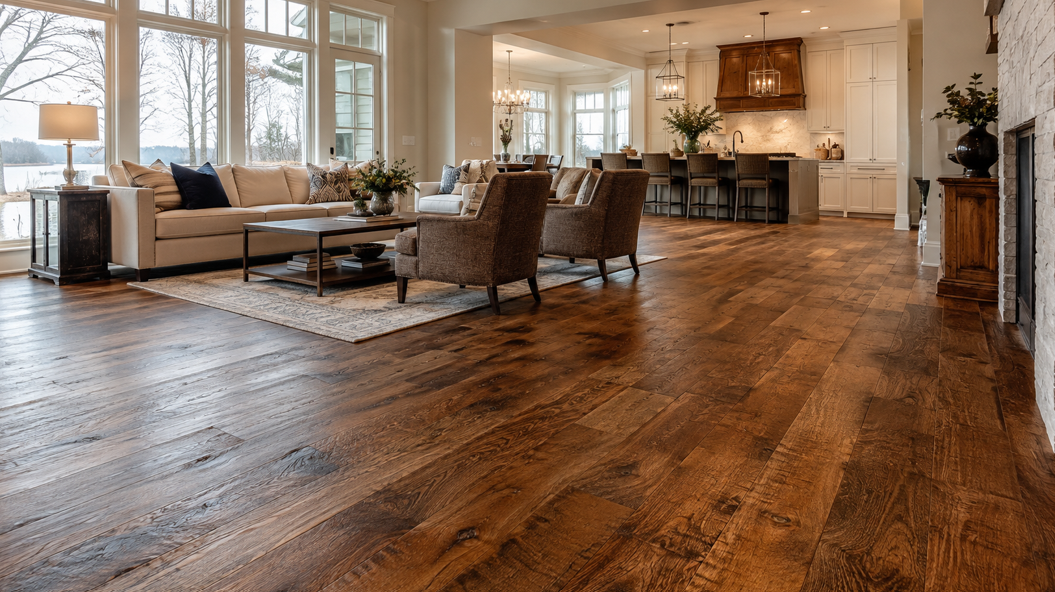
Hardwood floors do not have to be perfectly smooth to look polished. In fact, some of the most inviting hardwood styles in 2026 are heading in the opposite direction. Subtle grooves, visible grain, gently worked surfaces, and natural variation are giving floors more character while creating rooms that feel warm and lived-in.
For White Bear Lake homeowners, textured hardwood can be particularly appealing. It works beautifully with the area's mix of traditional, transitional, rustic, and updated interiors, while offering a more forgiving appearance for busy households.
Two finishes worth knowing are hand-scraped and wire-brushed hardwood. Although both add texture, they create noticeably different looks and suit different design preferences.
At Abbott Paint & Carpet, we have been helping Twin Cities homeowners choose beautiful, long-lasting flooring since 1945. If textured hardwood has caught your eye, this guide explains how hand-scraped and wire-brushed floors differ, where each works best, and how to choose a style that feels right in your White Bear Lake home.
Why Textured Hardwood Is Having a Moment in 2026
For years, smooth hardwood with a highly uniform appearance was a familiar choice. Today's flooring trends are increasingly embracing the natural character of wood instead.
Homeowners are showing more interest in surfaces where grain, knots, colour variation, and texture become part of the design rather than details that need to disappear.
The result is hardwood that feels more relaxed and personal.
Texture also complements the warmer direction that interior design has taken. Natural wood tones, creamy neutrals, soft browns, muted greens, warm whites, and other earth-inspired colours pair naturally with flooring that looks and feels authentic.
For homeowners who want a room to feel comfortable rather than overly formal, textured hardwood provides depth without requiring a dramatic design statement.
There is a practical advantage as well. A perfectly smooth, glossy surface can make small marks and everyday wear easier to notice. Texture and lower-lustre finishes can make some minor imperfections less visually prominent, which is appealing in homes with children, pets, frequent visitors, or active living spaces.
That does not make textured hardwood maintenance-free or resistant to every scratch. It is still real wood and needs appropriate care. What texture can do is create a more forgiving visual where normal signs of life may blend naturally into the character of the floor.
What Is Hand-Scraped Hardwood Flooring?
Hand-scraped hardwood is designed to recreate the subtle irregularities associated with traditionally worked wood.
Rather than presenting a completely flat surface, the plank has shallow contours, variations, and markings that create visible texture. Depending on the product, the effect can range from softly sculpted to deliberately rustic.
The name comes from the traditional process of working the surface of wood with hand tools. Modern flooring products can achieve the look through different manufacturing methods, so the amount and character of scraping vary significantly between collections.
That variation matters.
A heavily scraped floor can create a distinctly rustic or heritage-inspired appearance. A lightly scraped floor feels more refined and can work comfortably in transitional or even contemporary interiors.
What Does Hand-Scraped Hardwood Look Like?
Hand-scraped floors tend to have more noticeable surface variation than wire-brushed floors. Rather than emphasising the wood grain alone, the treatment creates gentle rises, dips, and irregular marks across the face of a plank.
These details interact with light differently throughout the day, adding depth to the floor.
In a large family room, for example, hand-scraped hardwood can prevent a broad expanse of flooring from looking flat. The texture introduces visual movement without the need for a complicated floor pattern.
The style is particularly attractive when paired with natural wood tones and visible character such as knots or grain variation.
Where Does Hand-Scraped Hardwood Work Best?
Hand-scraped hardwood is worth considering for:
Family rooms where you want a comfortable, welcoming atmosphere.
Dining spaces with traditional or transitional furniture.
Open-concept living areas where the flooring becomes a major design feature.
Homes with rustic, craftsman, farmhouse, or heritage-inspired details.
Busy rooms where an intentionally varied surface suits everyday family life.
The level of scraping is important. Homeowners who appreciate character but prefer a quieter room may want a subtle texture, while those seeking a stronger rustic statement may enjoy deeper surface variation.
What Is Wire-Brushed Hardwood Flooring?
Wire-brushed hardwood takes a different approach.
During the finishing process, the softer portions of the wood's surface are brushed away to bring greater attention to the harder grain. Instead of creating the broader contours associated with hand scraping, wire brushing tends to emphasise the wood's natural pattern.
The effect can be subtle but striking.
Run your hand across a wire-brushed plank and you can often feel the grain rather than experiencing a completely smooth surface. Visually, this gives the floor a natural, tactile quality that can work with a wide range of interior styles.
A More Refined Textured Look
Wire-brushed hardwood is an excellent option for homeowners who like texture but do not necessarily want a strongly distressed or rustic appearance.
Its character comes largely from emphasising what is already present in the wood. That makes it a natural companion for today's preference for authentic-looking materials and understated finishes.
White oak is particularly well suited to this aesthetic because its grain can become part of the overall design. Other species and products can also use wire-brushed finishes effectively, so it is worth comparing samples rather than choosing based on the name of the finish alone.
Wire brushing can feel at home in a traditional White Bear Lake property, but it can look equally appropriate alongside streamlined furniture, simple cabinetry, and modern lighting.
That versatility is one reason the style has lasting appeal.
Hand-Scraped vs. Wire-Brushed Hardwood: What Is the Difference?
Both styles introduce texture, but they create different effects.
Feature | Hand-Scraped Hardwood | Wire-Brushed Hardwood |
|---|---|---|
Overall appearance | Sculpted and intentionally varied | Natural and grain-focused |
Texture | Usually more noticeable | Often finer and more subtle |
Design character | Rustic, traditional, transitional | Natural, transitional, contemporary |
Grain emphasis | Present but not always the main feature | Usually strongly emphasised |
Visual variation | Can be significant from plank to plank | Often more restrained |
Best for | Homeowners wanting pronounced character | Homeowners wanting refined texture |
Neither option is inherently better. The right choice depends on the room and the feeling you want to create.
If your ideal floor has obvious personality and an artisanal, lived-in quality, hand-scraped hardwood may be the stronger fit.
If you want the natural grain of the wood to do most of the visual work, wire-brushed hardwood may feel more appropriate.
Seeing both finishes in person is particularly helpful because texture can be difficult to judge from a small online photograph.
6 Textured Hardwood Trends Shaping Homes in 2026
The renewed interest in textured hardwood is connected to several broader design directions. Together, these trends are creating floors that feel warmer, more natural, and easier to integrate into everyday homes.
1. Texture Is Becoming More Refined
Today's textured floors do not necessarily have the heavily distressed appearance associated with some rustic styles of the past.
Subtle hand-scraping and lighter wire brushing can add character while maintaining a polished overall look. This makes textured hardwood easier to use in homes where traditional architecture is combined with updated furnishings and finishes.
2. Warm and Natural Wood Tones Are Taking Centre Stage
Warm oak, honey, natural brown, caramel, and other earthy tones work especially well with textured surfaces because the finish brings attention to grain and variation.
These colours can also make a White Bear Lake living space feel inviting during Minnesota's colder months without relying on extremely dark flooring.
3. Low-Lustre Finishes Complement Texture
A textured surface and a softer sheen are natural partners.
Low-lustre and matte-style finishes allow the grain and physical texture of the floor to provide visual interest without creating strong glare. The overall effect feels relaxed and natural rather than highly polished.
4. Wider Planks Give Grain More Room to Show
Wide-plank hardwood remains appealing because each board displays more of the wood's natural pattern.
When wider boards are combined with wire brushing or restrained hand scraping, grain, knots, and tonal changes become an intentional part of the room. The floor itself can provide plenty of character even when the rest of the interior is relatively simple.
5. Natural Variation Is Being Celebrated
Homeowners do not always want every plank to look identical.
Variations in grain and tone can create a layered, authentic appearance. Textured finishes support this approach by drawing attention to the qualities that make wood feel like a natural material.
6. Traditional and Modern Styles Are Mixing
One of the most useful characteristics of textured hardwood is its ability to bridge different design eras.
A wire-brushed oak floor can complement a classic fireplace and traditional millwork while still looking appropriate with contemporary sofas and updated lighting. Likewise, a subtly hand-scraped floor can add warmth to a renovated kitchen without turning the entire room rustic.
For White Bear Lake homes, where renovations often need to respect existing architectural character while introducing contemporary comfort, that flexibility can be particularly useful.
Why Textured Hardwood Works for Busy White Bear Lake Homes
Beautiful flooring still needs to make sense for everyday life.
Hardwood will always require reasonable care, but textured styles can be visually forgiving compared with very smooth, glossy surfaces. Small marks may blend more naturally with an intentionally varied surface rather than immediately attracting attention.
That can make textured hardwood worth considering in households with:
Children moving between indoor and outdoor spaces.
Pets whose claws can leave occasional surface marks.
Frequent entertaining and family gatherings.
Open living spaces that receive regular foot traffic.
Entry areas exposed to Minnesota's seasonal weather.
That said, texture does not make hardwood waterproof or damage-proof.
Snow, road salt, grit, and moisture can still be hard on wood floors. Entry mats, prompt clean-up of wet areas, furniture protection, and regular sweeping or vacuuming remain worthwhile.
Minnesota's changing seasons also make indoor humidity management important for wood flooring. Following the flooring manufacturer's care and environmental recommendations will help support long-term performance.
Choosing the Right Wood, Texture, and Colour
The finish is one part of the decision. Wood species, plank dimensions, colour, sheen, and natural variation all influence the final appearance.
Browsing different hardwood flooring options and comparing full-size samples can help you see how these characteristics work together.
Consider the Amount of Texture
Begin by deciding how noticeable you want the floor to be.
A lightly wire-brushed surface may provide enough character for a calm, understated interior. A more visibly hand-scraped plank can become a stronger design feature.
There is a wide middle ground between completely smooth flooring and dramatically distressed wood.
Consider the Wood's Natural Grain
Texture often looks best when it complements the characteristics of the species rather than fighting them.
A prominent grain can become even more expressive with wire brushing, while hand scraping can introduce another layer of movement and variation.
Compare several boards rather than relying on one sample. Natural wood varies, and seeing that variation can give you a much more realistic impression of the finished floor.
Consider the Colour in Your Actual Room
Light changes everything.
A warm wood tone may appear different in a south-facing room filled with daylight than it does in a hallway or family room with limited natural light.
Bring samples home and look at them during the morning, afternoon, and evening. Compare them with your walls, cabinetry, rugs, furniture, and trim.
Abbott's shop-at-home sample service can make this process especially convenient because you can judge flooring where it will actually be installed.
Consider the Rest of the House
Flooring creates continuity between rooms.
If your White Bear Lake home has traditional millwork, a brick fireplace, or classic cabinetry, a textured hardwood can reinforce those natural materials without making the interior feel dated.
If your furnishings are more contemporary, restrained wire brushing paired with a clean, warm wood colour can add depth without competing with the room.
Engineered or Solid Hardwood?
Texture can appear on both engineered and solid hardwood products, so surface style is not the only decision to make.
Solid hardwood is constructed from wood throughout the plank, while engineered hardwood uses a real hardwood surface layer over a layered core. Each construction has its own installation considerations and product specifications.
For Minnesota homeowners, it is useful to evaluate:
Where the floor will be installed.
Existing subfloor conditions.
Manufacturer installation requirements.
Indoor moisture and humidity conditions.
The specific construction of the product.
Long-term care expectations.
Rather than assuming one construction is automatically right for every house, it is better to match the product to the room and project.
A professional flooring consultation can help you compare these practical details alongside colour and texture.
How to Care for Textured Hardwood Floors
The grooves and grain of textured flooring do not require an entirely different lifestyle, but regular care is worthwhile.
Start with frequent removal of loose grit and debris. Dirt tracked indoors can act like an abrasive when it is repeatedly walked across a wood surface.
Use mats at exterior doors, particularly during Minnesota winters when shoes can bring in snow, moisture, salt, and grit.
Clean spills promptly and follow the manufacturer's recommendations for approved cleaning products. Avoid assuming that a general household cleaner is appropriate for every hardwood finish.
Furniture pads are also a simple way to reduce avoidable scratches when chairs, tables, or other pieces move.
For homes with pets, keeping nails reasonably trimmed can help reduce surface marks.
Most importantly, remember that the character of textured hardwood is part of its appeal. The goal is not to make a natural material look untouched forever. With appropriate care, the floor can continue to develop a comfortable, lived-in appearance while remaining a beautiful feature of the home.
Is Hand-Scraped or Wire-Brushed Hardwood Right for Your Home?
Start with the atmosphere you want.
Choose a hand-scraped look if you enjoy stronger character, gently sculpted surfaces, and flooring that contributes a rustic or artisanal quality to the room.
Consider a wire-brushed look if you prefer subtle texture, visible natural grain, and a finish that can move easily between traditional and contemporary design.
If you are unsure, compare the two side by side.
Photographs can show colour, but they rarely communicate texture accurately. Seeing and touching samples can reveal differences that are difficult to appreciate on a screen.
Also consider several planks together. A hardwood floor is made up of natural variation, and a single sample cannot always show the range of grain and colour you will see once an entire room is installed.
Bring More Natural Character to Your White Bear Lake Home
Hand-scraped and wire-brushed hardwood reflect a larger shift towards interiors that feel warm, natural, and personal. Instead of hiding every variation in the wood, these finishes use texture to bring grain and character to the foreground.
For White Bear Lake homeowners, either style can create a floor that feels timeless while still fitting comfortably with 2026 design trends. Hand-scraped hardwood offers a more sculpted, expressive look, while wire-brushed hardwood provides refined texture that emphasises the natural grain.
The best way to decide is to experience the materials in person.
Abbott Paint & Carpet's experienced flooring team can help you compare textures, wood tones, plank styles, and construction options for your home. Visit our White Bear Lake showroom or one of our St. Paul and Stillwater locations, use our shop-at-home sample service, or get in touch to start finding a hardwood floor that brings the right balance of beauty, character, and everyday practicality to your space.


