

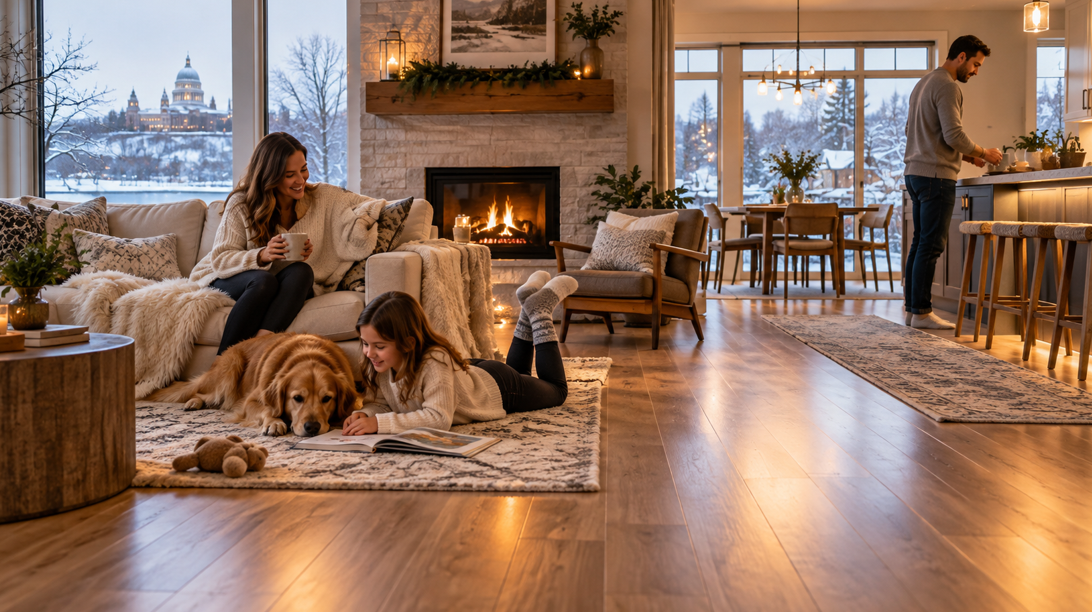
Anyone who has stepped onto a cold bathroom or kitchen floor on a January morning in St. Paul understands the appeal of radiant floor heating. Minnesota winters make warm floors feel less like a luxury and more like a practical comfort upgrade, especially in rooms with tile or other hard surfaces.
Radiant floor systems heat a room from the floor upward rather than relying entirely on warm air moving through vents. For some Twin Cities homes, that can create a more comfortable environment and make traditionally chilly rooms far more inviting during winter.
At Abbott Paint & Carpet, we have helped Minnesota homeowners choose flooring for local conditions since 1945. One of the most important things to understand about heated flooring is that the heating system and the finished floor need to work together. The right combination depends on the room, flooring material, installation method, budget, and how the space is used.
So, are heated floors worth considering for a St. Paul home? In many situations, yes. This guide explains how radiant heating works, the different systems available, which flooring materials pair well with it, and where the investment tends to make the most sense.
What Is Radiant Floor Heating?
Radiant floor heating places a heat source underneath the finished floor. Instead of warming a room primarily by circulating heated air, the system warms the floor surface, which then transfers heat upward into the room.
The result can feel noticeably different from conventional forced-air heating. Rather than stepping onto a cold surface and waiting for warm air to reach the room, the floor itself becomes part of the heating system.
There are two main types of residential radiant floor heating.
Electric Radiant Floor Heating
Electric systems typically use heating cables, mats, or similar elements installed beneath the finished flooring. Electricity warms the heating element, which transfers warmth through the floor surface.
Electric radiant systems are especially popular for individual rooms because they can often be installed within a relatively contained area. Bathrooms, kitchens, mudrooms, and small additions are common places homeowners consider them.
They can also work well during renovation projects when a floor is already being removed and replaced.
Hydronic Radiant Floor Heating
Hydronic systems use heated water circulating through tubing beneath the floor.
These systems are generally associated with larger areas or whole-home applications. Because the installation involves tubing, controls, and a source of heated water, hydronic systems tend to require more planning than a simple electric heating mat.
For homeowners building a new home or undertaking a substantial renovation, hydronic radiant heating may be worth exploring as part of the broader heating design.
For smaller projects, electric systems are often the more straightforward option.
Why Heated Floors Appeal to Minnesota Homeowners
Radiant flooring has obvious appeal in any cold climate, but Minnesota winters make its benefits particularly noticeable.
Warm Floors on Cold Mornings
Comfort is the most immediate benefit.
Tile, stone, and some other hard surfaces can feel very cold underfoot when outdoor temperatures drop. A heated floor can make bathrooms, kitchens, and entry areas feel more comfortable without changing the visual design of the room.
That can be especially welcome during the long winter months in St. Paul, when floors near exterior walls or above colder spaces may feel chilly.
More Even Heat
Traditional forced-air systems deliver heat through vents. Areas close to a vent may warm quickly while other parts of the room remain cooler.
Radiant heating spreads warmth across the floor surface. When the system is planned properly, that can create a more even sense of comfort throughout the space.
No Visible Heating Equipment
Radiant systems are installed beneath the floor, so they do not add visible radiators or heating units to a room.
For homeowners focused on clean interior design, this hidden installation can be appealing. Furniture placement is also less restricted by heating equipment along walls.
A More Comfortable Hard-Surface Floor
Some homeowners love tile or natural stone but hesitate to use it because of how cold the material can feel in winter.
Radiant heating can change that experience.
It allows homeowners to enjoy the durability and design flexibility of hard-surface flooring while adding warmth where it matters most.
Are Heated Floors Worth It in St. Paul?
For many homeowners, heated flooring is worth considering when it solves a specific comfort problem.
The strongest applications tend to be rooms where the floor naturally feels cold, where people frequently walk barefoot, or where a renovation already involves replacing the flooring.
A full-home radiant heating system is a much bigger decision than adding electric heat beneath a bathroom floor. That is why it helps to think of radiant heating as a spectrum rather than a single type of project.
Radiant Heating Often Makes Sense When:
You are already replacing the flooring in a bathroom, kitchen, mudroom, or lower-level space.
A room consistently feels colder than the rest of the house.
You want tile or stone but are concerned about winter comfort.
You are planning a major renovation or new construction project where the heating system can be designed from the beginning.
Comfort is a high priority in rooms used every day.
It May Be Less Compelling When:
The existing floor is staying in place and accessing the subfloor would require major additional work.
The room already stays comfortable throughout winter.
The chosen flooring material is not recommended for the specific heating system.
The project budget is better directed toward another upgrade with a greater impact on the space.
The question is therefore not simply, “Are heated floors worth it?” A better question is, “Will radiant heat meaningfully improve this particular room?”
The Best Rooms for Radiant Floor Heating
Radiant heat can technically be considered in many parts of a home, but certain rooms tend to benefit more than others.
Bathrooms
Bathrooms are perhaps the most natural fit.
Tile is common because it handles water well and offers tremendous design flexibility, but it can feel cold underfoot. Heated tile creates a noticeably different experience on winter mornings.
Bathrooms are also relatively contained spaces, which can make an electric radiant system practical during a remodel.
For many St. Paul homeowners, a heated bathroom floor is less about heating the entire house and more about making one frequently used room more comfortable.
Kitchens
Kitchens often combine hard flooring with long periods of standing.
A radiant system can make tile or other compatible surfaces feel more comfortable while preparing meals, cleaning, or gathering around an island.
Because kitchens are often connected to dining or living areas, careful planning matters. The heating layout, flooring transitions, cabinetry, and appliances all need to be considered before installation.
Mudrooms and Entryways
Minnesota mudrooms work hard.
They deal with snowy boots, wet coats, salt, pets, and constant traffic during winter. Durable tile or similar hard flooring is a natural choice, but those materials can feel particularly cold near exterior doors.
Radiant heat can make an entry area more comfortable while still allowing homeowners to choose flooring that stands up well to moisture.
Basements
Finished basements can be challenging because concrete slabs often feel cold.
Radiant heating may help make certain lower-level spaces more inviting, particularly when paired with a compatible finished floor.
However, basement projects require thoughtful planning. Moisture conditions, subfloor preparation, insulation, and flooring compatibility all need to be evaluated before deciding on a system.
Bedrooms and Living Areas
Radiant heat can also be used in larger living spaces, although the decision tends to be more project-specific.
If a whole-home hydronic system is already part of the design, bedrooms and living areas may be included. For an individual renovation, many homeowners prioritise bathrooms and other hard-surface rooms first because that is where the comfort difference tends to be most noticeable.
Which Flooring Works Best Over Radiant Heat?
Flooring choice is one of the most important parts of a radiant heating project.
Different materials transfer and respond to heat differently, and individual flooring manufacturers may set specific temperature or installation requirements.
Before selecting a final product, confirm that both the flooring and the heating system are designed to work together.
When exploring flooring options, it helps to discuss radiant heating early in the selection process rather than treating it as an addition after the floor has already been chosen.
Tile and Stone
Tile and stone are among the most natural partners for radiant heating.
These materials transfer heat effectively and can retain warmth after the system has been operating. Porcelain and ceramic tile are especially popular in bathrooms, kitchens, and mudrooms.
Because tile can otherwise feel cold during a Minnesota winter, radiant heat can significantly improve comfort without changing the floor's durable characteristics.
Engineered Hardwood
Some engineered hardwood products can be installed over radiant heating systems when the product manufacturer approves the application.
Engineered construction can provide more dimensional stability than traditional solid wood, which may make certain products better suited to temperature changes.
However, wood is sensitive to heat and moisture conditions. System temperature, installation method, humidity, wood species, and manufacturer guidance all matter.
This is a category where product-specific advice is particularly valuable.
Luxury Vinyl
Many luxury vinyl products may also be compatible with radiant heat, provided the system stays within the temperature range specified by the flooring manufacturer.
Luxury vinyl can be attractive for kitchens, lower levels, and other busy rooms because it combines practical maintenance with a wide range of wood and stone looks.
As with engineered hardwood, compatibility needs to be confirmed for the exact product.
Laminate
Some laminate flooring is approved for radiant heating applications.
The product's construction, underlayment, temperature limits, and installation method all affect suitability. Rather than assuming every laminate floor will work, check the specifications for the particular material being considered.
Carpet
Radiant heat and carpet can sometimes work together, but carpet and padding naturally insulate more than tile or stone.
A thick carpet and dense cushion may slow heat transfer, reducing the effectiveness of the system.
If radiant heating is planned beneath carpet, choosing compatible carpet and cushion products is important so the heating system can perform as intended.
Radiant Heating and Flooring Compatibility at a Glance
Flooring Type | Radiant Heat Compatibility | Best Use |
|---|---|---|
Porcelain or ceramic tile | Excellent in many applications | Bathrooms, kitchens, entries, mudrooms |
Natural stone | Excellent when properly installed | Bathrooms, kitchens, feature spaces |
Engineered hardwood | Product-dependent | Living areas, kitchens, bedrooms |
Luxury vinyl | Product-dependent | Kitchens, basements, family spaces |
Laminate | Product-dependent | Bedrooms, living areas, offices |
Carpet | Possible with suitable carpet and cushion | Bedrooms and selected living spaces |
Manufacturer requirements always take priority, so confirming compatibility before installation helps avoid problems later.
Electric vs. Hydronic: Which System Fits Your Project?
Choosing between electric and hydronic radiant heat depends heavily on the scale of the project.
Electric Systems Are Often Best for Individual Rooms
If you are remodelling a bathroom or installing new tile in a kitchen, electric radiant heating is often worth considering.
The heating elements can be installed beneath the new floor without redesigning the heating system for the entire home.
Electric systems can also allow homeowners to control the heated area separately, depending on the system design.
Hydronic Systems Make More Sense for Larger Projects
Hydronic radiant heat becomes more attractive when heating a large portion of a home.
Because water tubing is incorporated beneath the flooring, these systems are easier to plan during new construction or substantial renovation than as a small retrofit.
The upfront project is more involved, but a hydronic design can provide extensive radiant heating throughout multiple rooms.
For many existing St. Paul homes, the practical choice may therefore be electric heat for one or two key spaces rather than converting the entire property.
What Does Radiant Floor Heating Cost?
There is no single price that applies to every heated-floor project.
Cost depends on several factors, including:
The size of the heated area.
Whether the project uses electric or hydronic heat.
The condition of the existing subfloor.
Whether old flooring needs to be removed.
The type of new flooring being installed.
Electrical, plumbing, or heating-system modifications.
Thermostats and control systems.
Labour and installation complexity.
A bathroom renovation where the floor is already being replaced can be very different from retrofitting radiant heating throughout an existing main level.
This is one reason planning early matters. If heated floors are part of your renovation goals, incorporating them into the project from the beginning can make it easier to coordinate flooring height, transitions, electrical work, subfloor preparation, and finished materials.
Does Radiant Heating Lower Energy Bills?
Radiant heating can distribute warmth efficiently in the room where it is installed, but whether it reduces overall energy costs depends on the home and the system.
Factors such as insulation, thermostat settings, system type, utility rates, floor covering, home construction, and how the system is used all affect operating cost.
A small electric bathroom system used primarily for comfort is different from a hydronic system designed to heat a large portion of a house.
For that reason, radiant heat is better viewed first as a comfort and heating-design decision rather than assuming it will automatically reduce household energy bills.
What to Consider Before Installing Heated Floors
A little planning goes a long way with radiant floor heating.
Think About the Flooring First
The finished floor and heating system need to be compatible. If you already have a specific hardwood, vinyl, laminate, or carpet in mind, confirm that the manufacturer approves it for radiant heating.
Consider Floor Height
Heating components, underlayment, tile backer, or other installation materials may affect finished floor height.
This can influence transitions between rooms, doors, cabinetry, and appliances.
Check the Subfloor
A stable, properly prepared subfloor is essential to any flooring installation and becomes even more important when a heating system is involved.
Basement moisture conditions and concrete slabs deserve particular attention.
Plan Controls Carefully
Many radiant systems use their own thermostat.
Think about when the room is used and how you want the system controlled. A bathroom may benefit from warming before the household wakes up, while a mudroom may have different usage patterns.
Coordinate the Trades
Some projects involve flooring installers, electricians, plumbers, or heating professionals.
Planning the sequence ahead of time helps create a smoother installation and reduces the chance that one part of the project conflicts with another.
Heated Floors vs. Traditional Heating: Do You Need Both?
In many remodels, radiant floor heat is used as supplemental comfort rather than as the home's sole heating source.
A heated bathroom floor, for example, may work alongside an existing forced-air system. The home's central heating continues to maintain the overall indoor temperature while radiant heat makes the floor more comfortable.
Whole-home hydronic systems are different. When designed appropriately, radiant heating may play a much larger role in the home's heating strategy.
For existing St. Paul houses, supplemental radiant heat is often the more realistic renovation approach because it allows homeowners to improve specific rooms without completely redesigning the home's HVAC system.
Is Radiant Floor Heating Right for Your St. Paul Home?
Radiant floor heating can be a worthwhile addition when comfort matters and the project circumstances make sense.
For a bathroom remodel, heated tile can turn a cold winter floor into one of the most comfortable surfaces in the house. In a kitchen or mudroom, radiant heat can make durable hard-surface flooring feel more welcoming. Larger hydronic systems may appeal to homeowners planning extensive renovations or new construction.
The most successful projects start by treating the heating system and flooring as one decision rather than two separate purchases.
Consider the room, the flooring material, how often the space is used, the scale of the renovation, and how much you value the added comfort. In many Twin Cities homes, targeted radiant heating in a few key rooms provides the most practical balance.
Make Minnesota Winters More Comfortable from the Floor Up
Radiant floor heating will not be necessary in every room or every home, but it can make a meaningful difference where cold surfaces are part of everyday winter life.
For St. Paul homeowners, bathrooms, kitchens, mudrooms, and certain lower-level spaces are especially worth considering. Tile and stone are natural partners for radiant heat, while selected engineered hardwood, luxury vinyl, laminate, and carpet products may also work when manufacturer requirements are followed.
If you are planning new flooring and wondering whether radiant heating belongs in the project, the team at Abbott Paint & Carpet can help you compare materials and think through how each option fits your space. We serve homeowners throughout St. Paul and the wider Twin Cities area from our St. Paul, White Bear Lake, and Stillwater showrooms.
When you are ready to start planning, get in touch and let our experienced team help you choose a beautiful floor that feels comfortable through even the coldest Minnesota months.


