

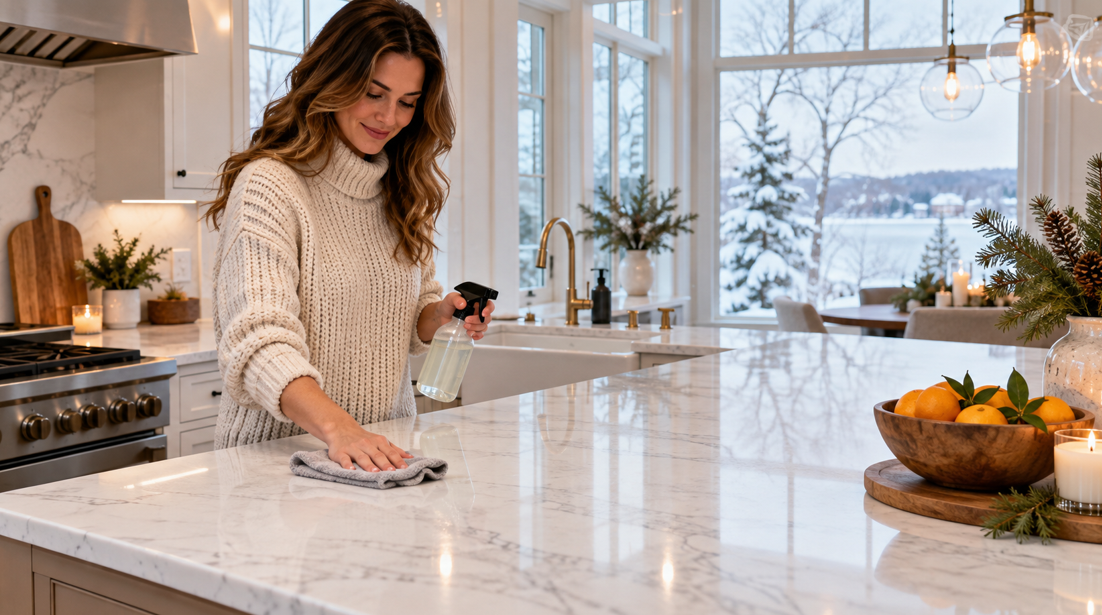
Minnesota winters change the rhythm of life at home. Kitchens see more hot meals, baking, holiday gatherings, wet coats and bags coming in from outside, and plenty of time spent indoors. For Mendota Heights homeowners with quartz countertops, that makes autumn a smart time to review a few simple care habits before winter settles in.
Quartz is popular because it combines beautiful design with impressive everyday durability. It does not require the regular sealing associated with many natural stones, and routine cleaning is generally straightforward. Even so, no countertop surface is completely maintenance-free. Heat, abrasive cleaners, stubborn spills, sharp impacts, and moisture around seams can all affect how a surface looks and performs over time.
At Abbott Paint & Carpet, we help Twin Cities homeowners choose surfaces that fit both their design vision and everyday lifestyle. The good news is that caring for quartz through a Minnesota winter does not require an elaborate routine. A few consistent habits can help keep your countertop looking polished, clean, and ready for everything from weekday dinners to winter entertaining.
Does Minnesota Winter Weather Affect Quartz Countertops?
Quartz countertops inside a heated home are not exposed to the same freeze-thaw conditions as an exterior surface. In most kitchens and bathrooms, normal seasonal temperature changes are not the primary concern.
Winter does, however, change how the countertop is used.
Cold-weather cooking often means more hot cookware, slow cookers, baking trays, roasting pans, coffee makers, and countertop appliances. Holiday gatherings can also bring more food preparation, spills, serving dishes, and guests into the kitchen.
Minnesota homes may also experience drier indoor air once the heating system is running regularly. Quartz itself is not especially sensitive to normal indoor humidity changes, but caulked joints, backsplashes, cabinetry, and other surrounding materials can respond to seasonal conditions differently.
That means winter quartz care is less about protecting the surface from outdoor temperatures and more about managing increased kitchen activity.
For Mendota Heights homeowners, the most useful winter maintenance priorities are:
Cleaning everyday spills promptly.
Protecting the surface from excessive heat.
Avoiding harsh or abrasive cleaning products.
Keeping seams and sink areas clean and dry.
Preventing heavy impacts and scratches.
Checking surrounding caulk and joints periodically.
Those simple habits can go a long way towards preserving the appearance of a quartz surface.
1. Keep Daily Cleaning Simple
One of the advantages of quartz is that routine care is usually easy.
For everyday cleaning, a soft cloth or non-abrasive sponge with warm water and a mild dish soap is often all that is needed. Wipe the surface clean, then dry it with a soft cloth if you want to reduce streaks or water marks.
A regular wipe-down becomes especially useful in winter because kitchens often see heavier use. Soups simmer on the hob, baking ingredients cover the island, hot drinks are prepared throughout the day, and family gatherings may keep the kitchen active for hours.
The best routine is often the simplest one: clean food and liquid spills before they have time to dry onto the surface.
Clean Spills Promptly
Quartz is designed to resist many common household stains, but stain-resistant does not mean stain-proof.
Coffee, tea, red wine, tomato sauce, cooking oils, colourful spices, and other strongly pigmented foods are better cleaned sooner rather than later.
If something spills:
Remove any solid material carefully.
Wipe up excess liquid.
Clean the area with warm water and mild soap.
Rinse away any remaining cleaner.
Dry the area with a soft cloth.
Prompt cleaning is particularly useful during holiday cooking, when a kitchen island or countertop may be handling several recipes at once.
Avoid Aggressive Scrubbing
A stubborn spot can make it tempting to reach for a rough scouring pad, but abrasive materials may dull or alter the appearance of the finish.
Start with the gentlest cleaning method that will do the job.
For dried food, allow a damp cloth to sit on the area briefly to soften the residue before wiping. If the manufacturer of your specific quartz product recommends a particular cleaning method for tougher marks, follow that guidance.
2. Protect Quartz from Hot Cookware
Heat protection is one of the most important habits for maintaining quartz countertops.
Quartz surfaces contain natural quartz minerals combined with binders and other materials. While the finished countertop is durable, sudden or prolonged exposure to high heat can potentially affect the resin components or create discolouration or damage.
That matters even more in winter, when kitchens tend to see more hot cookware.
A roasting pan coming straight from the oven, a baking sheet, a hot Dutch oven, or a slow cooker used for hours may all expose the surface to concentrated heat.
Use Trivets Consistently
The easiest solution is to create a barrier between hot cookware and the countertop.
Use:
Trivets beneath pots and pans.
Heat-resistant pads beneath roasting dishes.
Protective boards beneath countertop cooking appliances when appropriate.
Suitable mats beneath appliances that generate sustained heat.
It takes only a few seconds to place a trivet, but the habit can help protect the countertop for years.
Be Careful Around Small Appliances
Winter brings plenty of countertop appliances into regular use: slow cookers, electric kettles, coffee machines, air fryers, toaster ovens, and other cooking equipment.
The appliance itself may be designed for countertop use, but it is still worth following both the appliance manufacturer's instructions and the care guidance for your quartz surface.
Make sure equipment has adequate ventilation and avoid placing unusually hot removable parts directly on the countertop.
3. Choose Quartz-Safe Cleaning Products
A beautifully maintained surface does not need an aggressive chemical routine.
Strong cleaners can sometimes do more harm than good. Highly alkaline or acidic products, strong solvents, abrasive powders, and certain harsh household chemicals may affect the appearance or finish of a quartz surface.
When choosing a cleaner, check that it is appropriate for engineered quartz and follow the countertop manufacturer's recommendations.
For most daily cleaning, mild soap and water are enough.
Products Worth Approaching Carefully
Avoid assuming that a cleaner is suitable simply because it is marketed as heavy-duty.
Be cautious with:
Abrasive powders.
Scouring creams.
Strong oven cleaners.
Paint removers or stripping chemicals.
Highly concentrated bleach solutions.
Drain-cleaning chemicals.
Rough scrub pads or steel wool.
If a strong chemical accidentally contacts the countertop, wipe it up promptly and rinse the area thoroughly with clean water.
When in doubt, test any new cleaner according to the surface manufacturer's guidance rather than experimenting on a visible area.
4. Pay Attention to Sink Areas and Seams
Quartz itself is non-porous, but a countertop installation includes more than the main slab.
Sink cut-outs, seams, backsplashes, caulked areas, faucet openings, and the joint between the countertop and surrounding materials deserve attention too.
Winter cooking can mean more dishes, more water around the sink, and more frequent countertop cleaning. Keeping these areas tidy can help prevent moisture and residue from accumulating where different materials meet.
Wipe Around the Sink Regularly
After washing dishes or cleaning the kitchen, wipe away standing water around:
Faucet bases.
Sink rims.
Soap dispensers.
Countertop seams.
Caulked backsplash joints.
This does not require constant attention. A quick wipe at the end of the day is usually enough to prevent water, soap residue, and mineral deposits from building up.
Look at Caulked Joints
As seasons change, materials throughout a home may move slightly.
If you notice cracking, separation, or deterioration in caulk around the sink or backsplash, it is worth addressing before moisture begins working its way into the joint.
The quartz slab may remain perfectly sound while surrounding installation materials need maintenance.
5. Prevent Scratches and Heavy Impacts
Quartz is a hard, durable surface, but treating it as indestructible can shorten its good looks.
Cutting directly on the countertop is not recommended. A cutting board protects both the surface and your knives while giving you a dedicated work area for food preparation.
This becomes especially useful during winter entertaining, when charcuterie boards, baking projects, holiday meals, and larger cooking sessions put extra demands on the kitchen.
Use Cutting Boards
A cutting board is a simple way to reduce unnecessary surface wear.
It also makes food preparation easier to contain and clean up.
For a busy kitchen, keeping one or two attractive boards within easy reach can make surface protection feel like part of the design rather than an inconvenience.
Avoid Dropping Heavy Objects
Quartz is strong, but edges and corners can be more vulnerable to hard impacts.
Heavy cast-iron cookware, large serving pieces, or small appliances should be placed down carefully rather than dropped onto the surface.
Pay particular attention around sink cut-outs and exposed countertop edges.
6. Keep Winter Grit Away from the Countertop
Road salt and gritty snow are usually thought of as flooring problems, but winter debris can travel farther into the home than expected.
Grocery bags, backpacks, parcels, handbags, pet supplies, and other items may be placed on kitchen counters after being outdoors or sitting on the floor of a vehicle.
Fine grit underneath an object can act as an abrasive if the item is dragged across the surface.
A useful winter habit is to wipe dirty or wet items before placing them on an island or countertop. Better yet, create a designated landing space near the entryway for bags and parcels.
If grit does reach the counter, remove it gently rather than rubbing it across the surface.
7. Give High-Use Areas a Little Extra Attention
Every kitchen has certain places that see more use than others.
The area around the coffee maker may collect drips. The section next to the cooker may receive splashes of oil. A kitchen island may serve as a workspace, dining surface, homework station, and gathering place all in the same day.
Winter often intensifies those patterns because households spend more time indoors.
A few strategic habits can help:
Keep a washable mat or tray beneath frequently used beverage stations if appropriate.
Wipe cooking splashes before they harden.
Use serving boards beneath messy food-preparation projects.
Keep coasters available for hot drinks.
Clean beneath small appliances periodically rather than allowing crumbs and residue to accumulate.
Maintenance is easier when it matches the way the household actually uses the space.
8. Use the Right Approach for Stubborn Residue
Even with good daily care, quartz can occasionally develop dried-on residue.
The goal is to remove it without damaging the finish.
Begin with warm water and mild soap. Letting a damp cloth rest briefly over dried food can make it easier to wipe away.
For more persistent residue, consult the cleaning guidance supplied by the manufacturer of your specific quartz product. Quartz products can differ, and a cleaner recommended for one surface may not necessarily be ideal for another.
Avoid improvising with sharp metal tools or harsh chemicals.
When considering new countertops, it is also worth asking about care requirements before making a final selection. Understanding day-to-day maintenance can help you choose a surface that fits your household as well as your design preferences.
9. Prepare Your Quartz for Holiday Entertaining
From Thanksgiving gatherings to December celebrations, winter often turns the kitchen into one of the busiest rooms in a Minnesota home.
A little preparation before guests arrive can make the countertop easier to protect while keeping the space functional.
Create Designated Hot Zones
Decide where hot pots, casserole dishes, and serving trays will go before cooking begins. Place trivets or protective pads in those areas so no one has to search for one while carrying a hot dish.
Keep Cutting Boards Ready
If several people will be preparing food, put out enough cutting boards to prevent direct cutting on the quartz.
Place Coasters Near Gathering Areas
If an island doubles as a drinks station, coasters can help contain rings, drips, and spills.
Clean as You Go
Removing spills periodically throughout cooking or entertaining is much easier than tackling dried food and sticky residue at the end of the evening.
These habits protect the surface without making guests feel as though the kitchen is too precious to use.
A well-designed countertop is meant to support everyday life.
10. Check Your Countertops as Part of Seasonal Home Maintenance
Early autumn is a good time for Mendota Heights homeowners to perform a quick countertop check before the busiest indoor months begin.
You do not need specialised equipment. Take a few minutes to look over the entire surface.
Check for:
Deteriorated caulk around the sink or backsplash.
Residue collecting around faucets.
Areas that may need more thorough cleaning.
Chips or damage around exposed edges.
Appliances that may need heat protection beneath them.
High-use areas where a cutting board or protective mat would be helpful.
Addressing small maintenance needs early can make winter care straightforward.
What Quartz Countertops Do Not Typically Need
One reason many homeowners choose quartz is the relatively simple maintenance routine.
Unlike certain natural-stone materials, engineered quartz generally does not require periodic sealing.
That can be particularly appealing for busy Twin Cities households that want a polished stone appearance without adding another recurring maintenance task to the calendar.
Quartz also does not need special seasonal conditioning because winter has arrived.
The focus should stay on good everyday habits: clean spills, avoid excessive heat, use appropriate cleaning products, protect against sharp impacts, and monitor joints around sinks and backsplashes.
Frequently Asked Questions About Quartz Winter Care
Can I Put a Hot Pan Directly on Quartz?
Using a trivet or heat-resistant pad is the safer habit.
Quartz is durable, but prolonged or sudden high heat may affect the materials used in the surface. Creating a protective barrier takes very little effort and reduces unnecessary risk.
Does Quartz Need to Be Sealed Before Winter?
Engineered quartz generally does not require sealing.
If you are unsure which surface is installed in your home, check the original product information or speak with a countertop professional before applying any sealing product.
Can Indoor Winter Dryness Damage Quartz?
Normal seasonal indoor humidity changes are generally not the main maintenance concern for quartz itself.
However, adjacent materials such as cabinetry, wood trim, and caulked joints can respond to changes in temperature and humidity. It is sensible to inspect seams and joints periodically.
What Is the Best Way to Clean Quartz Every Day?
For routine cleaning, warm water, mild dish soap, and a soft cloth or non-abrasive sponge are usually a straightforward combination.
Always follow the care recommendations provided for the specific quartz product installed in your home.
Can I Use Disinfectant on Quartz?
Some disinfecting products may be appropriate, while others may contain chemicals that are not recommended for certain quartz surfaces.
Check the countertop manufacturer's instructions before using a new disinfectant or concentrated cleaning chemical.
Keep Your Mendota Heights Kitchen Beautiful All Winter
Quartz countertops are designed for real homes, and maintaining them through a Minnesota winter does not need to become another demanding seasonal chore. Consistent everyday habits make the biggest difference.
Clean spills promptly, use trivets beneath hot cookware, choose gentle cleaning products, protect the surface during food preparation, and keep an eye on sink areas and caulked joints. With those basics in place, your kitchen can handle winter meals, gatherings, baking projects, and busy family days while continuing to look polished and inviting.
For Mendota Heights homeowners planning a kitchen refresh, countertop replacement, or wider renovation, seeing materials in person can also make it easier to compare colours, patterns, finishes, and maintenance requirements. Abbott Paint & Carpet serves homeowners throughout the Twin Cities from our St. Paul, White Bear Lake, and Stillwater showrooms.
When you are ready to explore options for your home, get in touch with our team. We will help you find a countertop that complements your space and fits comfortably into everyday life through winter and every season after.


