

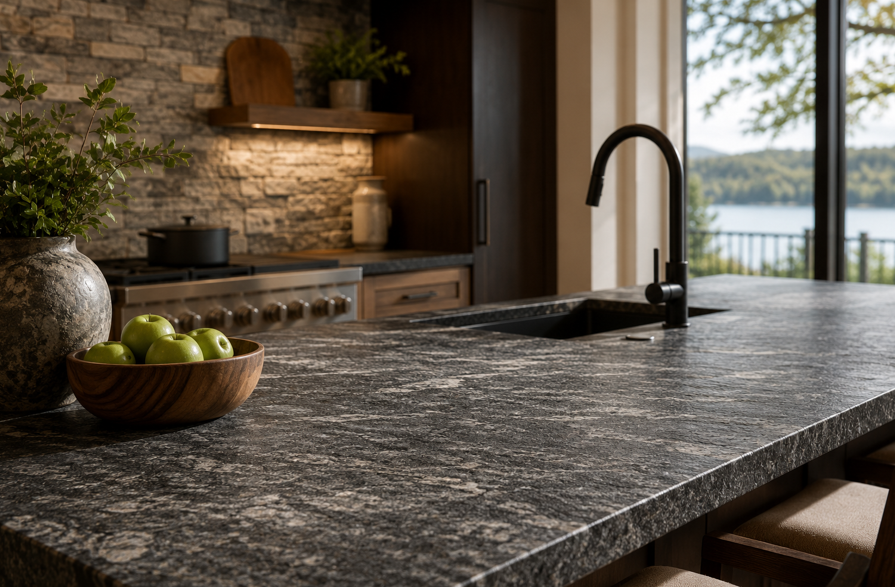
A countertop can change the entire feel of a kitchen, and in 2026, homeowners are paying attention to more than colour and pattern. Texture is becoming an increasingly important part of kitchen design, with natural surfaces that feel as interesting as they look taking centre stage.
That is helping leathered granite earn renewed attention.
Unlike the reflective shine of traditional polished granite, a leathered finish has a softer, more tactile surface that highlights the stone's natural movement. The result feels sophisticated without being overly formal and works particularly well in kitchens designed around warm woods, natural colours, and materials with genuine character.
At Abbott Paint & Carpet, we have been helping Twin Cities homeowners create beautiful, practical interiors since 1945. For Stillwater homeowners considering natural stone, leathered granite offers an appealing way to combine granite's familiar durability with a distinctive finish that feels especially relevant in 2026.
Here is what makes leathered granite different, why textured countertops are gaining attention, and what to consider before bringing this look into your kitchen.
What Is Leathered Granite?
Leathered granite starts with natural granite, but instead of being polished to a glossy sheen, the stone undergoes an additional finishing process that creates a textured, lower-lustre surface.
The exact appearance varies because every granite slab is different. Some leathered surfaces feel gently textured, while others have more pronounced movement depending on the stone's mineral composition and the finishing process.
The important difference is that the surface does not have the mirror-like quality associated with polished granite.
Instead, leathered granite tends to have:
A matte or softly reflective appearance.
A tactile surface that can emphasise natural grain and mineral variation.
Greater visual depth in certain darker stones.
A relaxed, organic character.
Less obvious glare from windows and overhead lighting.
Because the finish follows and enhances the characteristics already present in the stone, two leathered granite slabs can look noticeably different.
That individuality is part of the appeal.
Rather than trying to make natural stone appear completely uniform, leathering allows its variations to become an intentional design feature.
Why Textured Countertops Are Trending in 2026
Kitchen design in 2026 is increasingly focused on warmth, natural materials, and spaces that feel personal rather than perfectly manufactured.
Texture plays an important role in that shift.
A room containing smooth cabinetry, metal appliances, glass, and painted surfaces can benefit from a countertop that introduces a different visual and tactile quality. Leathered granite does that without requiring a dramatic colour or highly decorative pattern.
1. Homeowners Want More Natural-Looking Materials
There is growing appreciation for materials that reveal their natural variation rather than hiding it.
Wood grain, stone veining, handmade surfaces, and softer finishes can give a kitchen depth that highly uniform materials sometimes lack.
Leathered granite fits naturally into this approach because the texture allows the mineral structure of the stone to remain part of the design.
2. Highly Reflective Surfaces Are No Longer the Only Option
Polished stone remains a classic choice, but it is no longer the default look for every natural-stone kitchen.
Homeowners now have more freedom to choose finishes that feel softer and less reflective.
A leathered countertop can absorb light differently from polished stone, giving the kitchen a quieter, more relaxed atmosphere.
3. Texture Adds Interest to Neutral Kitchens
Neutral kitchens remain popular, but neutral does not have to mean flat or plain.
If cabinetry, walls, and flooring stay within warm whites, creams, taupes, browns, or natural wood tones, texture becomes an effective way to create contrast.
A leathered granite island can add visual depth without introducing an entirely new colour palette.
4. Natural Imperfection Feels More Personal
Many homeowners are becoming more comfortable with variation in natural materials.
Instead of expecting every section of a stone surface to look identical, they appreciate mineral deposits, changes in tone, veining, and movement as part of what makes the material unique.
Leathered granite reinforces that feeling.
5. Kitchens Are Becoming More Tactile
A kitchen is not a room you simply look at. It is a space where people cook, gather, eat, work, and entertain.
That makes tactile materials particularly appropriate.
The subtle texture of leathered granite gives the surface a physical quality that can make an island or perimeter countertop feel more substantial and distinctive.
Leathered vs. Polished vs. Honed Granite
Understanding the differences between granite finishes can make it easier to decide whether leathered stone suits your home.
All three options begin with natural stone. The difference is how the surface is finished.
Granite Finish | Appearance | Texture | Overall Character |
|---|---|---|---|
Polished | Glossy and reflective | Smooth | Classic, elegant, formal |
Honed | Matte to satin | Generally smooth | Soft, understated, contemporary |
Leathered | Low sheen | Tactile and textured | Natural, dimensional, distinctive |
Polished Granite
Polished granite has the familiar glossy surface many homeowners associate with natural-stone countertops.
The polishing process can make colours appear richer and create strong reflections from lighting. It works beautifully in traditional and formal kitchens and remains a timeless choice.
However, homeowners who prefer a softer or more organic look may find the high sheen less aligned with their design goals.
Honed Granite
Honed granite offers a matte or satin-like appearance without necessarily creating significant texture.
It has less reflection than polished granite and can create a calm, contemporary feel.
Honed surfaces are often appealing in kitchens where homeowners want natural stone without a glossy finish.
Leathered Granite
Leathered granite takes the low-sheen concept further by introducing tactile texture.
That texture can highlight natural variations in the slab and give the countertop a more dimensional appearance.
For Stillwater homeowners drawn to natural materials, historic character, warm interiors, or updated rustic design, it can be an especially interesting option.
Why Leathered Granite Works So Well in Stillwater Kitchens
Stillwater has a strong sense of architectural character. Homes throughout the area range from historic properties to newer residences that incorporate traditional and natural design influences.
Leathered granite can work across that spectrum.
In an older home, it can complement existing woodwork and architectural details without appearing too slick or contemporary.
In a newer kitchen, the same stone can introduce warmth and texture alongside streamlined cabinetry and modern appliances.
It Complements Natural Wood
Leathered granite and wood are natural partners.
Oak, walnut, maple, and other wood tones introduce grain, while textured stone provides a contrasting organic surface.
A kitchen with warm wood cabinetry and leathered granite can feel sophisticated without becoming overly formal.
It Can Balance Painted Cabinetry
Leathered granite can also provide contrast against painted cabinets.
With warm white or cream cabinetry, darker leathered stone can create a striking focal point. With green, blue, or earthy-toned cabinetry, a granite containing complementary mineral colours can help connect the palette.
The combination works because the countertop introduces texture while the cabinetry provides a calmer visual backdrop.
It Feels Appropriate in Both Traditional and Updated Homes
One of the strengths of leathered granite is that it does not belong exclusively to one design style.
Depending on the particular slab, it can suit:
Traditional kitchens.
Transitional interiors.
Modern organic spaces.
Rustic-inspired designs.
Contemporary kitchens.
Historic home renovations.
The surrounding materials determine much of the final effect.
That flexibility can be valuable for Stillwater homeowners who want to update a kitchen without stripping away the character that makes their home distinctive.
What Are the Advantages of Leathered Granite?
The appearance is what initially attracts many homeowners, but there are several reasons leathered granite can work well in a busy kitchen.
A Distinctive Natural Look
Every granite slab is unique, and leathering can make its natural characteristics even more visible.
Depending on the stone, darker areas, mineral deposits, grain, and movement may become more prominent once the surface has been textured.
This can make the countertop feel less like a background material and more like part of the room's overall design.
Reduced Glare
Because leathered granite has less shine than polished granite, it generally produces fewer strong reflections.
That can be particularly appealing in kitchens with large windows, substantial natural light, or multiple overhead fixtures.
Instead of bouncing light back from the surface, the lower-lustre finish can create a softer look.
Fingerprints and Everyday Marks May Be Less Noticeable
A glossy dark surface can sometimes make fingerprints, smudges, and water marks visually prominent.
The texture and reduced reflectivity of leathered granite may make some everyday marks less obvious, although the result depends on the particular stone and colour.
This can be a practical advantage on large islands that receive frequent use.
Granite Is a Strong Kitchen Material
Granite has a long history as a kitchen countertop material because of its durability.
It is a hard natural stone with good scratch resistance, although cutting boards are still a great idea for food preparation. Granite can also tolerate substantial heat, but trivets are recommended rather than placing very hot cookware directly on the surface.
The finish changes the appearance and feel of the stone. It does not eliminate the need for sensible everyday care.
Are There Any Drawbacks to Leathered Granite?
Leathered granite has plenty of appeal, but homeowners benefit from understanding the practical considerations before choosing it.
The Texture Varies from Stone to Stone
If you want an extremely smooth, perfectly uniform surface, leathered granite may not be the right fit.
The amount of texture depends on the slab and finishing process.
That is why seeing a physical sample — and ideally the slab itself when possible — matters far more than relying on a photograph.
Cleaning Can Feel Different from a Polished Surface
A polished countertop is exceptionally smooth, while a leathered surface has texture.
Depending on how pronounced that texture is, wiping the surface may feel slightly different.
Regular cleaning is still straightforward, but it is worth experiencing the finish before making your final selection.
Not Every Granite Looks Best Leathered
Some stones respond particularly well to a leathered finish, while others may be more appealing polished or honed.
Colour, mineral structure, movement, and personal preference all influence the result.
The finish and slab therefore need to be selected together rather than deciding you want "leathered granite" without considering the stone itself.
Which Granite Colours Look Good with a Leathered Finish?
Leathered finishes can work across many colours, but they are especially striking on stones with strong mineral variation or rich colouring.
Dark Granite
Black, charcoal, and deep grey granite can look particularly dramatic when leathered.
Removing the high gloss can give dark stone a softer and more sophisticated character while allowing subtle mineral patterns to emerge.
A dark leathered island paired with warm wood or light cabinetry can create strong contrast without looking overly polished.
Warm Brown and Earth-Toned Granite
Granite containing brown, bronze, cream, or gold tones can work beautifully in kitchens built around natural warmth.
These stones pair naturally with wood cabinetry and warm neutral flooring.
Lighter Granite
Leathering is not limited to dark stone.
Light granite with visible mineral movement can provide a softer interpretation of the textured trend, especially in kitchens where homeowners want brightness without a highly reflective surface.
The best approach is to judge each slab on its own character.
You can explore Abbott's selection of countertops and compare different surface styles as part of the planning process.
Where Should You Use Leathered Granite?
You do not necessarily need to use the same finish on every countertop in the kitchen.
Texture can be especially effective when it is used intentionally.
Kitchen Islands
A large island is an ideal place to showcase natural stone.
Because the surface is visually prominent, a leathered finish can turn the island into a tactile design feature without relying on an unusual shape or colour.
A contrasting island is another possibility. For example, perimeter counters might remain lighter and quieter while the island introduces darker leathered granite.
Perimeter Countertops
Leathered granite can also work across the entire kitchen.
Using the material on perimeter counters creates a consistent natural texture that can connect cabinetry, flooring, and backsplash materials.
Beverage or Entertaining Areas
A leathered stone counter can give a bar or beverage station its own identity while maintaining the broader kitchen palette.
This is particularly effective in open-plan homes where these secondary areas remain visible from the main living space.
How to Care for Leathered Granite Countertops
Natural stone performs best when it receives appropriate care.
For everyday cleaning, use a soft cloth with a neutral cleaner intended for natural stone or mild soap and water according to the stone supplier's recommendations.
It is also a good idea to:
Blot spills promptly instead of allowing liquids to remain on the surface.
Use cutting boards rather than preparing food directly on the countertop.
Use trivets or mats beneath very hot cookware.
Avoid harsh abrasive products that could affect the finish.
Avoid assuming acidic household cleaners are suitable for your particular stone.
Follow professional recommendations for sealing the specific granite selected.
Granite varies in absorption, so sealing requirements can differ between stones. Some granite benefits from an impregnating sealer, while other varieties may not require the same treatment.
That is why care guidance should be based on the exact material in your kitchen rather than a general rule found online.
And when a sealer is recommended, remember that it increases resistance to staining rather than creating a completely stain-proof surface.
How to Choose the Right Leathered Granite for Your Kitchen
Because natural stone and textured finishes vary, this is a material worth choosing carefully.
See More Than a Small Sample
A small piece can demonstrate colour and texture, but it may not reveal the full movement of a slab.
Look at as much of the material as possible so you understand its variation.
Feel the Surface
Texture is part of the reason to choose leathered granite, so touch it.
Some homeowners prefer subtle texture. Others enjoy a more pronounced tactile surface.
There is no substitute for experiencing the material in person.
Compare It with Your Cabinetry and Flooring
Countertops do not exist in isolation.
Bring the colours of your cabinetry, flooring, backsplash, and paint into the decision. A stone that looks dramatic by itself may feel completely different once surrounded by other finishes.
Abbott's professional design team can help homeowners coordinate these elements so the room feels connected rather than assembled one product at a time.
Think About Lighting
Natural and artificial lighting can change the appearance of granite considerably.
Because leathered stone reflects less light than polished granite, dark colours may feel richer and deeper. Lighter granite may appear softer.
Look at samples under lighting similar to what you have at home whenever possible.
Is Leathered Granite Right for Your Stillwater Kitchen?
Leathered granite may be an excellent choice if you want:
A genuine natural-stone surface.
Less shine than conventional polished granite.
Noticeable texture and depth.
A countertop that works with warm and organic design.
Natural variation rather than a perfectly repeated pattern.
A material capable of complementing both traditional and modern interiors.
You may prefer polished granite if you love shine and want colours to appear highly reflective.
Honed granite may be more appropriate if you want a matte appearance but prefer a smoother surface.
And another countertop material may be the better match if highly consistent colour and pattern are your priorities.
The important part is choosing based on the way you want your kitchen to look and function, not on the trend alone.
Bring Texture and Natural Character into Your Stillwater Kitchen
Leathered granite feels especially relevant in 2026 because it brings together several qualities homeowners are looking for: natural material, tactile texture, softer sheen, and a sense of individuality.
It can give a Stillwater kitchen warmth without making it rustic, sophistication without excessive shine, and character without relying on a short-lived design statement.
The particular slab makes all the difference. Colour, mineral variation, texture, cabinetry, lighting, and surrounding finishes all need to work together to create the right result.
If you are considering new countertops for your Stillwater home, Abbott Paint & Carpet can help you compare materials and coordinate your countertop choice with the rest of your space. Our experienced design team works with homeowners across the Twin Cities from our Stillwater, St. Paul, and White Bear Lake locations.
Ready to explore the possibilities for your kitchen? Get in touch and let our team help you find a countertop that combines natural beauty, practical performance, and a finish you will enjoy for years to come.


