

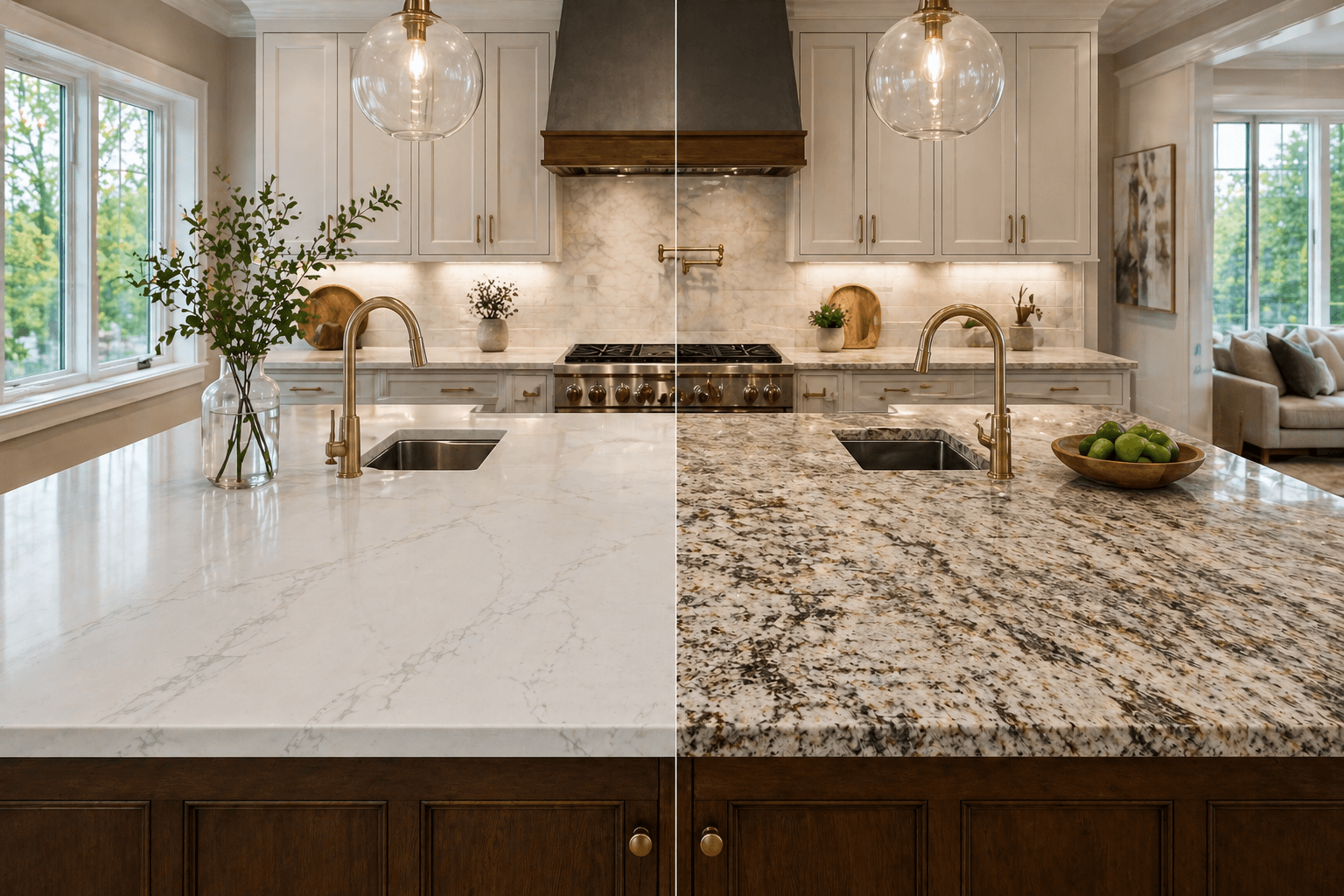
When it comes to choosing new countertops, few decisions come up as often—or feel as important—as quartz vs. granite. Both are popular, both are beautiful, and both can completely transform the look and function of your kitchen.
If you’re a homeowner in North Oaks planning a renovation in 2026, you’re likely weighing these two options carefully. And while they may seem similar at first glance, they offer very different benefits depending on your lifestyle, design preferences, and long-term goals.
At Abbott Paint & Carpet, we help homeowners compare materials every day, guiding them toward choices that feel right not just now, but years down the line.
In this guide, we’ll break down the key differences between quartz and granite, compare how they perform in Minnesota homes, and help you decide which surface makes the most sense for your space.
What Is Quartz vs. Granite?
Before diving into the comparison, it helps to understand what each material is and how it’s made.
Quartz Countertops
Quartz is an engineered material made from crushed natural quartz combined with resins and pigments. This creates a non-porous, durable surface with consistent colour and pattern.
Granite Countertops
Granite is a natural stone that is quarried and cut into slabs. Each piece is completely unique, with its own patterns, mineral deposits, and colour variation.
For homeowners who appreciate natural materials, granite offers a sense of authenticity and individuality that engineered products can’t fully replicate. Quartz, meanwhile, offers predictability and easy care, which makes it highly appealing in busy kitchens.
Appearance: Consistency vs. Natural Character
One of the biggest differences between quartz and granite is how they look in your home.
Quartz: Clean, Modern, and Predictable
Quartz is ideal if you want a streamlined, polished look. It offers consistent colour across the surface, controlled patterning, and a modern, refined aesthetic.
This makes it a strong choice for contemporary kitchens or spaces where you want a more uniform design.
Granite: Unique and Full of Personality
Granite stands out for its natural variation. It offers one-of-a-kind patterns, depth and movement in the stone, and a more organic, natural feel.
In North Oaks homes—where larger kitchens and open layouts are common—granite can add visual interest and become a true focal point.
If you’d like to explore both options in person, you can browse a wide range of countertops to see how each material looks in different styles and finishes.
Durability: Everyday Performance Compared
Both quartz and granite are built to last, but they perform differently depending on how your kitchen is used.
Quartz: Engineered for Reliability
Quartz is designed to handle daily wear with ease. It is highly resistant to scratches, non-porous, and consistent in performance across the entire surface.
For busy households, quartz offers a dependable, low-maintenance experience.
Granite: Naturally Strong and Long-Lasting
Granite is also a very durable material. It handles everyday use, high temperatures from cooking, and long-term wear when properly maintained.
Because it’s natural stone, its performance can vary slightly from slab to slab—but overall, it remains a strong and reliable option.
Helpful takeaway: Quartz is excellent for homeowners who want easy, consistent performance. Granite is ideal for those who value natural strength and one-of-a-kind character.
Maintenance: How Much Effort Is Involved?
Maintenance can make a big difference in how much you enjoy your countertops over time.
Quartz: Simple and Low Maintenance
Quartz is one of the easiest surfaces to care for. It does not require sealing, cleans easily with basic products, and resists staining and bacteria thanks to its non-porous surface.
Granite: Requires a Bit More Attention
Granite needs a bit more upkeep to stay in top condition. Periodic sealing helps protect the surface, spills should be cleaned promptly, and routine care keeps the stone looking its best.
For many homeowners, granite’s extra care is worth it for the natural beauty it provides. For others, quartz feels more convenient because it simplifies everyday cleaning and maintenance.
Heat and Moisture: Real-Life Kitchen Performance
Kitchens see everything from hot pans to spills, so it’s important to understand how each material handles these conditions.
Quartz: Strong but Heat-Conscious
Quartz performs well overall but can be sensitive to extreme heat. Using trivets or protective pads is a good habit to maintain the surface over time.
Granite: Excellent Heat Resistance
Granite handles heat very well. It’s a great option for homeowners who cook frequently and want a surface that can withstand high temperatures.
Moisture Considerations
Quartz is non-porous, meaning it naturally resists moisture. Granite, on the other hand, can absorb liquids if it’s not sealed properly. With regular sealing, however, it performs well in everyday kitchen use.
Performance in Minnesota Homes
North Oaks homes experience cold winters, dry indoor air, and seasonal humidity changes. Your countertops need to handle these conditions without issue.
Quartz: Stable Year-Round
Quartz remains consistent regardless of temperature or humidity changes. It does not expand or contract in a way that creates concerns for normal indoor kitchen use, making it a reliable option for Minnesota homes.
Granite: Performs Well with Proper Care
Granite also performs well, but it benefits from proper sealing and maintenance to ensure it continues to handle moisture and daily use effectively.
Local tip: For North Oaks homeowners planning a full kitchen renovation, countertop selection should be considered alongside cabinetry, flooring, lighting, and daily cooking habits so the finished space feels cohesive and practical.
Cost: What to Expect
Both quartz and granite are considered premium countertop materials, but pricing can vary depending on the product and installation.
Quartz
Quartz typically falls into a mid-to-high price range. Its consistent manufacturing process means pricing is usually predictable, which can be helpful when planning a renovation budget.
Granite
Granite pricing can vary more widely. Some options are comparable to quartz, while more unique or rare slabs can cost more.
In North Oaks homes, both materials are often seen as worthwhile investments that enhance the overall value and appeal of the kitchen.
Where Each Material Works Best
Sometimes the best choice depends on where the countertops will be used and how the space functions.
Quartz Works Well In:
Busy family kitchens where low maintenance is a priority.
Modern or minimalist designs that benefit from clean consistency.
Homes where stain resistance and everyday convenience matter most.
Granite Works Well In:
Kitchens with a natural or traditional feel.
Spaces where unique materials and stone movement are preferred.
Homes where heat resistance is especially important.
Many homeowners find that either option can work beautifully—it’s simply a matter of choosing what aligns best with your lifestyle.
So, Which One Is Right for Your North Oaks Home?
There’s no single “right” answer—only the one that fits your needs.
If you prefer a clean, consistent look with minimal upkeep, quartz is a great choice.
If you love natural variation and want a surface with unique character, granite may be the better fit.
Both materials offer long-term value and can transform your kitchen into a space that feels both functional and beautiful.
Bringing It All Together in North Oaks
Choosing between quartz and granite is an important step in creating a kitchen that reflects your style and supports your daily routine. Both materials offer real benefits, and either can become a standout feature in your home.
At Abbott Paint & Carpet, we help homeowners compare materials in person, making it easier to choose with confidence.
Ready to explore your options? Our team is here to help—get in touch and we’ll guide you through every step of your project.


