

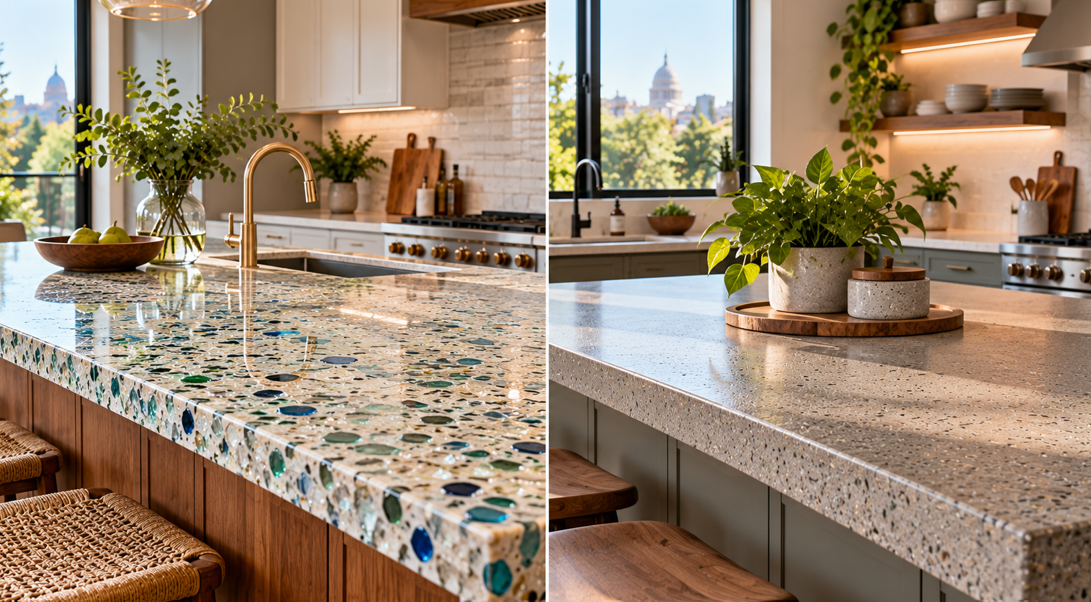
Sustainability has moved from a niche interest to a mainstream priority in kitchen design. More homeowners want surfaces that look beautiful, perform well and reflect their values. Recycled glass and eco-composite countertops answer all three, and they are attracting real interest from St. Paul families planning renovations in 2026.
At Abbott Paint & Carpet, we have served the Twin Cities from our Grand Avenue store since 1945, and we love helping homeowners find materials that feel good to live with. This guide explains what recycled glass and eco-composite countertops are, how they perform, where they work best and what to consider before you choose one.
Why Sustainable Countertops Are Trending
A countertop is one of the largest surfaces in a kitchen, so the material you choose has a meaningful environmental footprint. Homeowners are increasingly asking where their materials come from and what happens to them at the end of their life.
Several factors are driving the shift:
Growing awareness of waste and resource use in home renovation.
Better product quality, with eco surfaces now rivaling traditional stone in looks and durability.
A desire for unique, story-rich design rather than mass-produced finishes.
Interest in healthier homes with low-emission materials.
In a city like ours, where many residents care deeply about neighborhood character, local parks and the Mississippi riverfront, sustainable design feels like a natural fit.
What Are Recycled Glass Countertops?
Recycled glass countertops are made from crushed post-consumer and post-industrial glass, such as bottles, windows and jars. The glass pieces are bound together with either a cement-based binder or a resin, then cured, cut and polished into slabs.
The Look
The finished surface often looks like terrazzo, with flecks of colored glass suspended throughout. Designs range from subtle, fine-grained surfaces in soft whites and grays to bold, confetti-like mixes of green, blue and amber.
The Benefits
Diverts glass from landfills and gives it a long second life.
Creates a truly distinctive, eye-catching surface.
Resin-bound versions are generally non-porous and easy to clean.
Reflects light beautifully, brightening darker kitchens.
Points to Consider
Cement-bound recycled glass is more porous and may need sealing. Glass edges can chip with a hard knock, and some products are sensitive to very high heat, so trivets are a wise habit.
What Are Eco-Composite Countertops?
Eco-composite countertops is a broad term covering surfaces made from recycled or renewable content. Common examples include:
Paper composite, made from recycled paper fibers bonded with resin.
Surfaces with high recycled content blended into engineered materials.
Composites using reclaimed industrial byproducts such as fly ash or porcelain.
The Look
Paper composite surfaces have a smooth, warm, matte appearance that suits modern and Scandinavian-style kitchens. Other composites can mimic stone or concrete with a lighter environmental footprint.
The Benefits
Durable surfaces suitable for everyday kitchen use.
Often lighter in weight than natural stone.
Many options are non-porous and resist staining.
A warm, natural feel that pairs well with wood cabinetry.
Where Sustainable Countertops Work Best
Recycled glass and eco-composite surfaces suit a wide range of St. Paul homes, from historic Summit Hill and Macalester-Groveland houses to newer condos downtown.
Kitchen Islands
An island is the perfect place to showcase a colorful recycled glass slab as a conversation piece.
Bathrooms and Powder Rooms
Smaller spaces let you experiment with bolder colors without committing an entire kitchen.
Laundry Rooms and Mudrooms
Durable composites hold up well in hardworking spaces, especially during Minnesota winters when boots, coats and wet gear pile up near the back door.
To compare materials, colors and finishes for your project, browse our selection of countertops and see what inspires you.
How to Choose the Right Eco Countertop
Before deciding, consider these factors:
Recycled content. Ask what percentage of the material is recycled and what the binder is made from.
Maintenance. Find out whether the surface needs sealing and how often.
Heat and scratch resistance. Match the material to how you cook and use your kitchen.
Design goals. Decide whether you want a bold statement or a calm, understated surface.
Budget. Sustainable surfaces span a wide range, so it helps to set a clear budget early.
Our experienced design team can help you weigh these factors and see how each option looks alongside your cabinets, flooring and paint colors.
Pairing Eco Countertops With a Sustainable Kitchen Design
A sustainable countertop looks even better as part of a wider eco-conscious plan. Many homeowners pair recycled glass or composite surfaces with cork flooring, a renewable material harvested from tree bark without cutting down the tree. As an authorized Benjamin Moore retailer, our team can also help you choose low-odor, low-VOC paint options that keep indoor air fresher during a renovation. Energy-efficient lighting and well-chosen window treatments can complete the look while keeping your kitchen comfortable through long Minnesota winters and humid summers. Together, these choices create a space that feels thoughtful from floor to ceiling.
Caring for Sustainable Countertops
Most eco surfaces need simple, gentle care:
Clean with mild soap and warm water.
Avoid abrasive pads and harsh chemicals.
Use cutting boards and trivets to protect the finish.
Reseal cement-based surfaces as the manufacturer recommends.
With sensible care, these countertops can stay stunning for many years.
Build a Greener Kitchen in St. Paul
Recycled glass and eco-composite countertops prove that sustainable design can be beautiful, durable and full of personality. Whether you want a colorful statement island or a warm, understated surface, there is an eco-friendly option to suit your St. Paul home.
At Abbott Paint & Carpet, our knowledgeable team offers personalized design guidance and free in-home estimates. Visit our St. Paul showroom at 1808 Grand Ave or call (651) 698-5518. Contact our team today, and we will help you explore sustainable countertop options for your next project.


