

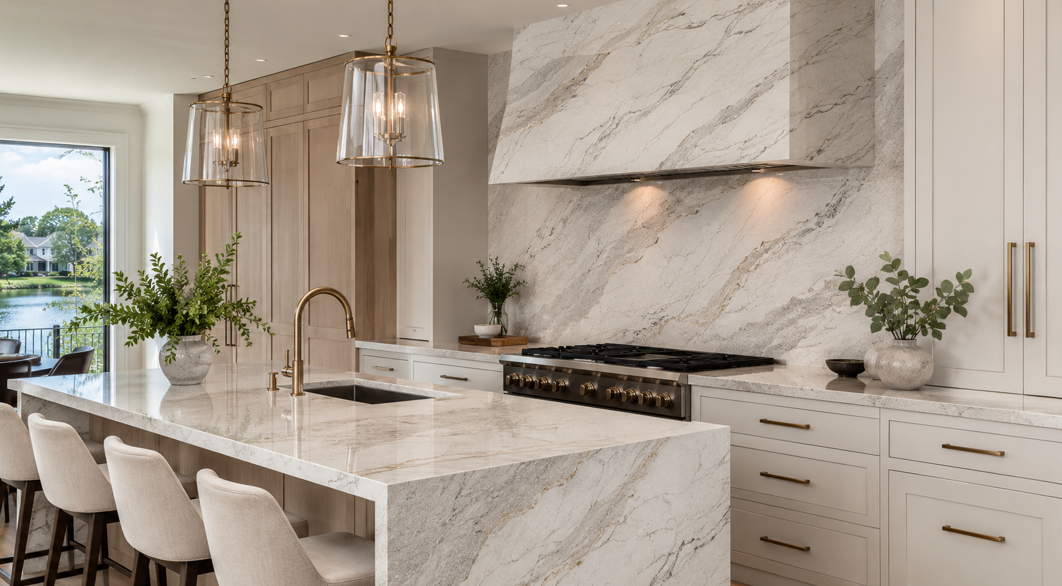
Some kitchen designs feel beautiful because of one bold feature. Others feel beautiful because every surface works together so smoothly that the whole room feels calm, polished, and complete. That is the appeal of matching slab backsplashes and countertops. Instead of choosing a separate tile backsplash, homeowners continue the same countertop material up the wall, creating one seamless surface from counter to backsplash.
For Mendota Heights homeowners, this look fits especially well. Many homes in the area balance classic Twin Cities charm with refreshed, high-end interiors. A matching slab backsplash can make a kitchen feel more open, elegant, and thoughtfully designed without adding unnecessary visual clutter.
At Abbott Paint & Carpet, we have helped local homeowners bring their kitchen and interior design ideas to life since 1945. Matching countertops and slab backsplashes are becoming a favourite choice for homeowners who want a kitchen that feels current, practical, and timeless. In this guide, we will explore why this design is trending, which materials work best, how to use the look well, and what to consider before adding it to your Mendota Heights kitchen.
What Is a Slab Backsplash?
A slab backsplash uses a large piece of countertop material on the wall behind the counter instead of smaller backsplash tile. In many kitchens, the same material used for the countertop is continued vertically up the wall. This creates a clean, connected look where the counter and backsplash feel like one complete design feature.
The slab may extend a few inches above the countertop, reach the bottom of the upper cabinets, or continue all the way to the ceiling. Full-height slab backsplashes are especially popular in 2026 because they create a dramatic but refined effect. When the material has veining or natural movement, the pattern can flow from the countertop up the wall, adding depth and visual interest.
This design can be used behind a range, behind a sink, along the full perimeter of the kitchen, or on a feature wall. Some homeowners use it throughout the entire kitchen, while others reserve it for one standout area, such as behind the cooktop or around a statement island.
A matching slab backsplash can be made from several countertop materials, including quartz, quartzite, granite, marble, porcelain, or other surface options. Each material creates a different mood. Quartz can feel sleek and consistent. Quartzite can feel natural and luxurious. Granite can add rich movement and durability. Marble can feel classic and elegant. Porcelain can create a slim, modern look with impressive design versatility.
The main design idea is simple: fewer grout lines, fewer interruptions, and more visual flow. For homeowners who want their kitchen to feel calm and cohesive, that simplicity is a major part of the appeal.
Why Matching Countertops and Backsplashes Are Trending in 2026
Kitchen design in 2026 is leaning towards surfaces that feel intentional, natural, and easy to live with. Homeowners are still drawn to beautiful materials, but many are moving away from overly busy combinations. Instead of pairing patterned countertops with a separate patterned backsplash, more people are choosing one strong surface and letting it carry the design.
Matching countertops and slab backsplashes support that shift beautifully. The look feels elevated without needing extra decoration. It can make the kitchen appear larger, cleaner, and more custom because the eye is not interrupted by grout lines, tile borders, or competing materials.
This trend also pairs well with the rise of statement stone. Natural stone and stone-look materials with bold veining are popular because they bring movement and character into the kitchen. Continuing the same material onto the wall allows that veining to become a design feature. The result can feel almost like artwork, especially behind a range or open shelving.
For Mendota Heights kitchens, this approach can work across many home styles. In a traditional home, a marble or quartzite slab backsplash can add elegance while still feeling classic. In a more modern kitchen, a full-height porcelain or quartz slab can create a clean, architectural look. In a family-focused kitchen, a durable quartz or granite surface can offer beauty with practical day-to-day benefits.
Matching slab backsplashes are also popular because they simplify the design process. Choosing a countertop is already a major decision. Once that surface is selected, continuing it onto the wall removes the need to find a separate tile, grout colour, pattern, and layout. For many homeowners, that creates a smoother, more guided renovation experience.
The best part is that this look can feel both current and long-lasting. It reflects modern design preferences, but it is grounded in quality materials and clean lines rather than short-lived decoration.
The Design Benefits of a Matching Slab Look
A matching slab backsplash does more than look beautiful. It can change how the entire kitchen feels. Because the same surface continues from the counter to the wall, the room often feels more unified and polished.
One of the biggest benefits is visual continuity. In kitchens with open layouts, the backsplash is often visible from the dining room, living area, or entryway. A matching slab creates a calm backdrop that helps the kitchen blend more smoothly with the rest of the home. This is especially helpful in Mendota Heights homes where kitchens often connect to family rooms or main-level entertaining spaces.
Another benefit is reduced visual clutter. Traditional tile backsplashes can be beautiful, but they introduce grout lines, pattern, texture, and sometimes colour variation. A slab backsplash creates a cleaner surface. This can make cabinetry, hardware, lighting, and flooring feel more intentional because there is less competition between materials.
A slab backsplash can also make a countertop material feel more luxurious. A quartzite or marble-inspired surface becomes more impactful when it continues upward. Even a subtle material can feel more elevated when used this way. The kitchen gains a custom look without needing ornate details.
There are practical benefits too. Fewer grout lines can make cleaning more straightforward. In areas behind the sink or range, a smooth slab surface can be easier to wipe down than small-format tile with grout. For busy households, that can make the kitchen feel more manageable day to day.
A matching slab backsplash may also help smaller kitchens feel larger. When the eye follows one continuous material, the space feels less broken up. Light-coloured slabs can brighten the room, while soft veining adds interest without making the kitchen feel crowded.
For homeowners who want a kitchen that feels refined, cohesive, and easy to enjoy, the slab look offers a strong balance of style and function.
Best Materials for Slab Backsplashes and Matching Countertops
The right material depends on the homeowner’s design goals, cooking habits, budget, and maintenance preferences. Since the countertop and backsplash will be highly visible, it is worth choosing a surface that feels beautiful and practical for the way the kitchen is used.
When exploring countertops, Mendota Heights homeowners may want to compare not only colour and pattern, but also durability, finish, edge details, and how the material will look when carried vertically.
Quartz
Quartz is one of the most popular choices for matching countertops and slab backsplashes because it offers consistency, durability, and a wide range of designs. Since quartz is engineered, homeowners can often find slabs with predictable colour and veining. This makes it easier to create a clean, controlled look.
Quartz works especially well for homeowners who want a low-maintenance surface with a polished or refined appearance. It can mimic marble, concrete, or natural stone while offering strong everyday performance. A soft white quartz with subtle veining can create a bright, timeless kitchen, while a bolder quartz design can make the backsplash a clear focal point.
Quartzite
Quartzite is a natural stone known for its dramatic beauty and strong performance. It often has the flowing veining homeowners love in marble, but many quartzite options are harder and more durable. Because it is natural, every slab is unique.
A quartzite slab backsplash can feel stunning in a kitchen where the stone is meant to be the centrepiece. Cream, taupe, grey, gold, and soft green veining can all bring depth to the room. Quartzite pairs beautifully with warm wood floors, painted cabinetry, and elegant lighting.
Granite
Granite remains a trusted choice for homeowners who want natural stone with durability and character. While some granite has a speckled look, many slabs now offer dramatic movement, linear veining, and rich colour variation.
Granite can be a smart option for busy kitchens because it performs well when properly sealed and cared for. A granite slab backsplash can look especially handsome in kitchens with warm cabinetry, deeper paint colours, or traditional details.
Marble
Marble creates a classic, luxurious look. Its veining is often soft, graceful, and instantly recognisable. A marble countertop with a matching slab backsplash can make a kitchen feel elegant and timeless.
However, marble needs more thoughtful care than some other materials. It can be sensitive to staining and etching, especially from acidic foods and drinks. For homeowners who appreciate natural patina and do not mind a surface that ages over time, marble can be a beautiful choice.
Porcelain
Porcelain slabs are gaining attention because they can offer impressive design flexibility. They can mimic marble, concrete, stone, or other surfaces, often in thinner formats than traditional stone. Porcelain can work well in modern kitchens where homeowners want a sleek, full-height backsplash with dramatic visual impact.
Because installation details vary by product, porcelain is best selected with professional guidance. When installed well, it can create a clean and contemporary effect.
Full-Height vs. Partial Slab Backsplash
One of the biggest design decisions is how far the slab should extend up the wall. There is no single right answer. The best choice depends on the kitchen layout, budget, material, and desired look.
Full-Height Slab Backsplash
A full-height slab backsplash usually runs from the countertop to the bottom of the upper cabinets, open shelves, range hood, or ceiling. This creates the most seamless and dramatic effect. It is especially beautiful when the material has veining, because the pattern becomes a vertical design feature.
Full-height slabs work well behind ranges, sinks, and feature walls. They can make a kitchen feel custom and high-end, particularly when paired with simple cabinetry and thoughtful lighting. In open-plan homes, a full-height backsplash can help the kitchen feel finished from every angle.
This option may require more material and careful fabrication, so it is worth planning early. The layout of outlets, windows, shelves, and range hoods can all affect the final result.
Partial Slab Backsplash
A partial slab backsplash extends a shorter distance above the countertop, often around four to six inches, though heights can vary. This look is more subtle and may be a better fit for homeowners who want continuity without covering a full wall.
A partial slab can also be paired with painted walls, tile above, or another design treatment. It is often more understated and may suit kitchens where the countertop itself is already bold.
Feature-Area Slab Backsplash
Some homeowners use a slab backsplash only in one area, such as behind the cooktop or sink. This can be a great way to introduce the look without using it across the entire kitchen. A dramatic slab behind the range can become a focal point, while simpler tile or painted walls are used elsewhere.
This approach works well when homeowners want the beauty of slab material but also want to manage the overall visual impact or project budget.
How to Make the Look Feel Cohesive
A matching slab backsplash already creates continuity, but the rest of the kitchen still needs to support it. Cabinets, flooring, paint colours, hardware, and lighting all affect how the slab looks once installed.
Start with the tone of the slab. A white or cream surface with warm veining often pairs well with warm white, taupe, mushroom, or natural wood cabinets. A cooler stone with grey or charcoal movement may work well with soft grey, navy, black, or crisp white cabinetry. A dramatic stone with gold or brown veining can feel especially beautiful with walnut, oak, brass, or warm neutral paint.
Cabinet style matters too. Simple cabinet doors often work best with bold slab surfaces because they allow the material to shine. Shaker doors, slab fronts, and inset cabinetry can all work depending on the home’s style. If the slab has dramatic veining, keeping cabinet details more restrained can help the kitchen feel balanced.
Flooring is another key piece. A kitchen with a bold countertop and slab backsplash usually benefits from flooring that feels warm and grounded rather than overly patterned. Natural wood, engineered hardwood, luxury vinyl, or tile in soft neutral tones can create a strong foundation without competing with the slab.
Lighting can bring the whole look together. Under-cabinet lighting can highlight the backsplash and show off the movement in the material. Pendant lights over an island can draw attention to the countertop surface. Natural light also plays a role, especially in Minnesota homes where the quality of light changes noticeably from winter to summer.
Hardware and fixtures provide the finishing touches. Brushed brass can warm up creamy stone. Polished nickel can feel classic with marble-like surfaces. Matte black can add contrast to lighter slabs. The goal is to choose finishes that echo the material rather than distract from it.
A cohesive kitchen does not need every element to match. It needs every element to feel like part of the same conversation.
Practical Considerations Before Choosing a Slab Backsplash
A slab backsplash is a beautiful design choice, but it benefits from careful planning. Because the material is large, visible, and custom-fitted, details matter.
One of the first considerations is slab layout. If the material has veining, homeowners may want to review how that veining will appear on the countertop and wall. In some designs, the veining can be matched or continued for a flowing effect. In others, the slab sections may be arranged to highlight the most attractive parts of the material.
Outlet placement is another important detail. Outlets are necessary, but they can interrupt the clean look of a slab backsplash. Some homeowners choose outlet covers that blend with the stone. Others explore under-cabinet outlet strips where appropriate. These decisions are best discussed early so the final design feels as smooth as possible.
Seams also matter. Large slabs may not cover every area without a seam, depending on the kitchen layout and material size. A skilled design and installation team can help place seams where they are less noticeable and make sure the pattern feels intentional.
Maintenance varies by material. Quartz is generally easy to care for. Granite and quartzite may need sealing depending on the product. Marble may require more careful cleaning and protection. Porcelain has its own installation and care considerations. Understanding the daily care routine before choosing a material helps prevent surprises later.
Cost is also part of the decision. A full-height slab backsplash can require more material and labour than a standard tile backsplash. However, many homeowners feel the finished look is worth every penny because it creates such a strong design impact.
Finally, timing matters. Countertops, backsplash slabs, cabinetry, plumbing, electrical work, and appliances all need to coordinate. A guided process can help homeowners avoid delays and make sure each decision supports the next.
Is a Matching Slab Backsplash Right for Your Mendota Heights Kitchen?
A matching slab backsplash may be a great fit if you want a kitchen that feels seamless, polished, and elevated. It is especially appealing for homeowners who prefer fewer grout lines, cleaner surfaces, and a more cohesive design.
This look works well in many kitchen styles. In a classic Mendota Heights home, a marble-inspired quartz or natural stone slab can feel timeless and graceful. In a modern kitchen, a full-height porcelain or quartz slab can create a sleek, architectural backdrop. In a warm transitional space, quartzite or granite can add natural movement while still feeling practical.
It may also be a strong choice if your kitchen is visible from other living areas. In open-plan homes, the backsplash is not a hidden detail. It is part of the view from the dining table, living room, hallway, or entry. A matching slab can make that view feel more refined and connected.
A different backsplash approach may be worth considering if you love handmade tile, colourful pattern, or a more layered look. Tile can still be beautiful and may better suit homeowners who want texture, contrast, or a more traditional backsplash style. The right choice depends on the feeling you want the kitchen to have.
For many homeowners, the best approach is to compare both options. Seeing a countertop sample next to tile, paint, cabinetry, and a slab-style design concept can make the decision much clearer.
Create a Kitchen That Feels Seamless and Beautiful
Matching countertops and slab backsplashes are one of the strongest kitchen design looks of 2026 because they bring elegance, simplicity, and visual flow into the heart of the home. For Mendota Heights homeowners, this design can make a kitchen feel refreshed and custom while still fitting beautifully into the character of a Twin Cities home.
The key is choosing the right material, the right height, and the right supporting finishes. Quartz, quartzite, granite, marble, and porcelain can all create stunning results when selected with care. Whether you want a dramatic full-height feature wall or a softer, more subtle continuation of your countertop, the final look should feel natural for your home and lifestyle.
If you are planning a kitchen update in Mendota Heights or the wider Twin Cities metro, Abbott Paint & Carpet can help you compare surfaces, coordinate finishes, and bring your vision together. Visit our St. Paul, White Bear Lake, or Stillwater showrooms, or get in touch to start planning your countertop project with a local team that understands Minnesota homes.


